Comfrey - The Bone Mender
Nature’s most underrated powerhouse

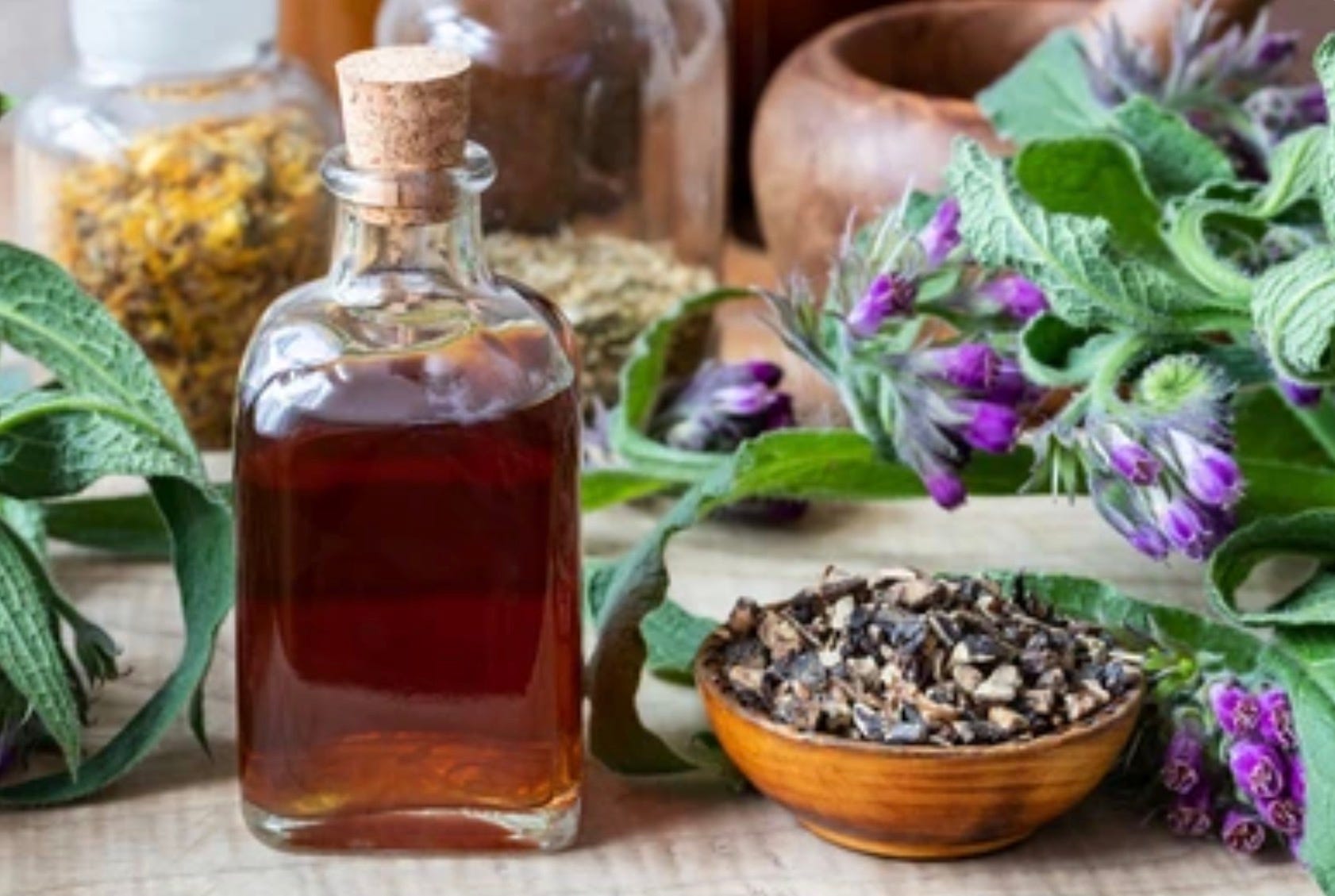
Hi Guys! Today I want to talk about comfrey, that underrated powerhouse lurking in old herbals and permaculture plots. You know the drill: the Rockefeller sick care machine loves to slap warnings on nature’s heavy hitters like this one, citing liver risks from pyrrolizidine alkaloids (PAs), but traditional healers have used it for centuries to knit bones, heal wounds, and boost vitality without the big pharma side effects.
And bonus! It’s the best organic fertilizer available and you can grow it super easy!
Comfrey (Symphytum officinale) is loaded with allantoin for cell regeneration, mucilage for soothing, and nutrients that make it a soil and body rebuilder. We’re talking hidden knowledge where this “knitbone” plant mends more than meets the eye.
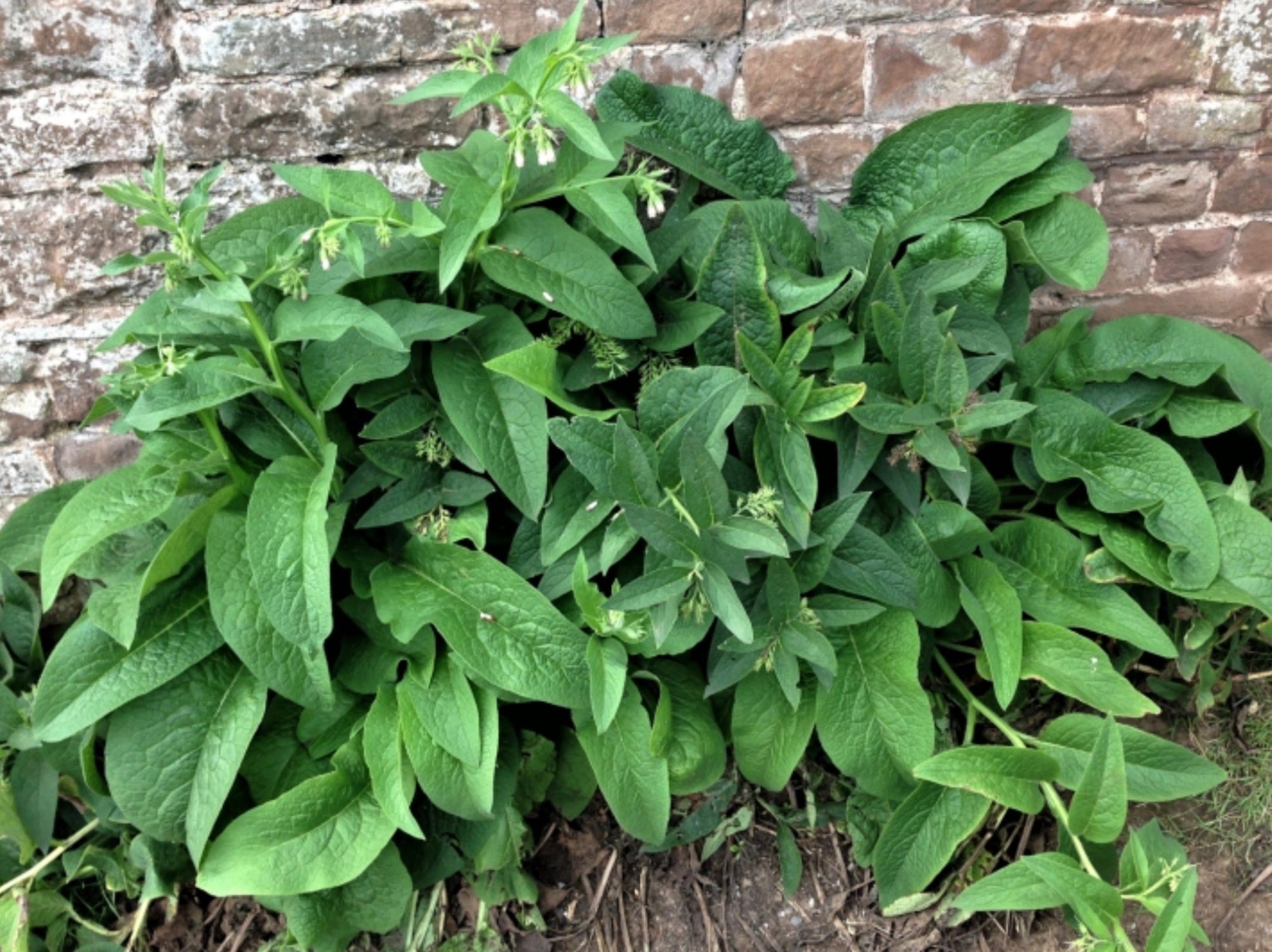
The Hidden Health Gems: Every Part of the Comfrey Counts
Comfrey’s a nutrient-dense beast with vitamins, minerals, and compounds like rosmarinic acid for anti-inflammation and allantoin for tissue repair. Traditional uses go way beyond the mainstream “topical only” narrative. Folks have brewed teas and eaten leaves for gut health, though modern cautions say stick to external for safety (PAs can build up internally, so know your limits and source PA-free varieties like Russian comfrey if possible).
Here’s the part-by-part lowdown:
Roots: The star for deep healing! They’re packed with allantoin to speed wound closure, reduce inflammation, and “knit” bones, hence the nickname. Great for sprains, bruises, arthritis, and even tendon repair. Anti-cancer potential in studies, plus they support digestion and detox when used carefully. Higher PA content, so topical is best.
Leaves: Bitter but brilliant for skin and muscles. They fight inflammation, heal burns, cuts, and eczema with their mucilage and antioxidants. Diuretic effects for water retention, and traditional teas for bronchitis or menstrual relief. Edible in moderation (choose young leaves) but wilt or cook to cut bitterness and risks. Diving deeper, these leaves are stellar for healing bones, bruises, and abrasions. Old-school herbalists used poultices to pull down swelling and speed tissue regrowth, thanks to that allantoin magic that cranks up cell turnover. Think of it as nature’s band-aid for rough-and-tumble injuries, bypassing the over-the-counter creams that just mask symptoms.
Flowers: Pretty purple bells that add mild healing vibes. Antioxidant-rich for skin health, they soothe irritations and support liver function in infusions. Less potent than roots/leaves, but great in salves or teas for a gentle anti-inflammatory boost.
Seeds: Not the headliner, but they’re viable for planting and carry the plant’s mineral-drawing power. Traditional uses include grinding into flours for gut aid, with fiber and nutrients for vitality. Sparse on direct benefits, but they embody the whole plant’s regenerative energy.
Other Parts (Stems and Whole Plant): Stems are juicy for hydration in poultices or ferments, adding mild detox. The whole shebang synergizes for immune support, pain relief, and even anti-viral whispers in old lore.
Special shoutout to the stalk gel: that mucilaginous sap inside the stems is like aloe on steroids for bug bites, stings, and poison ivy. Just split a fresh stalk, scoop the goo, and slap it on; it cools the itch, draws out toxins, and calms inflammation fast. Traditional foragers swear by it for instant relief without the chemical sprays that mess with your skin barrier.
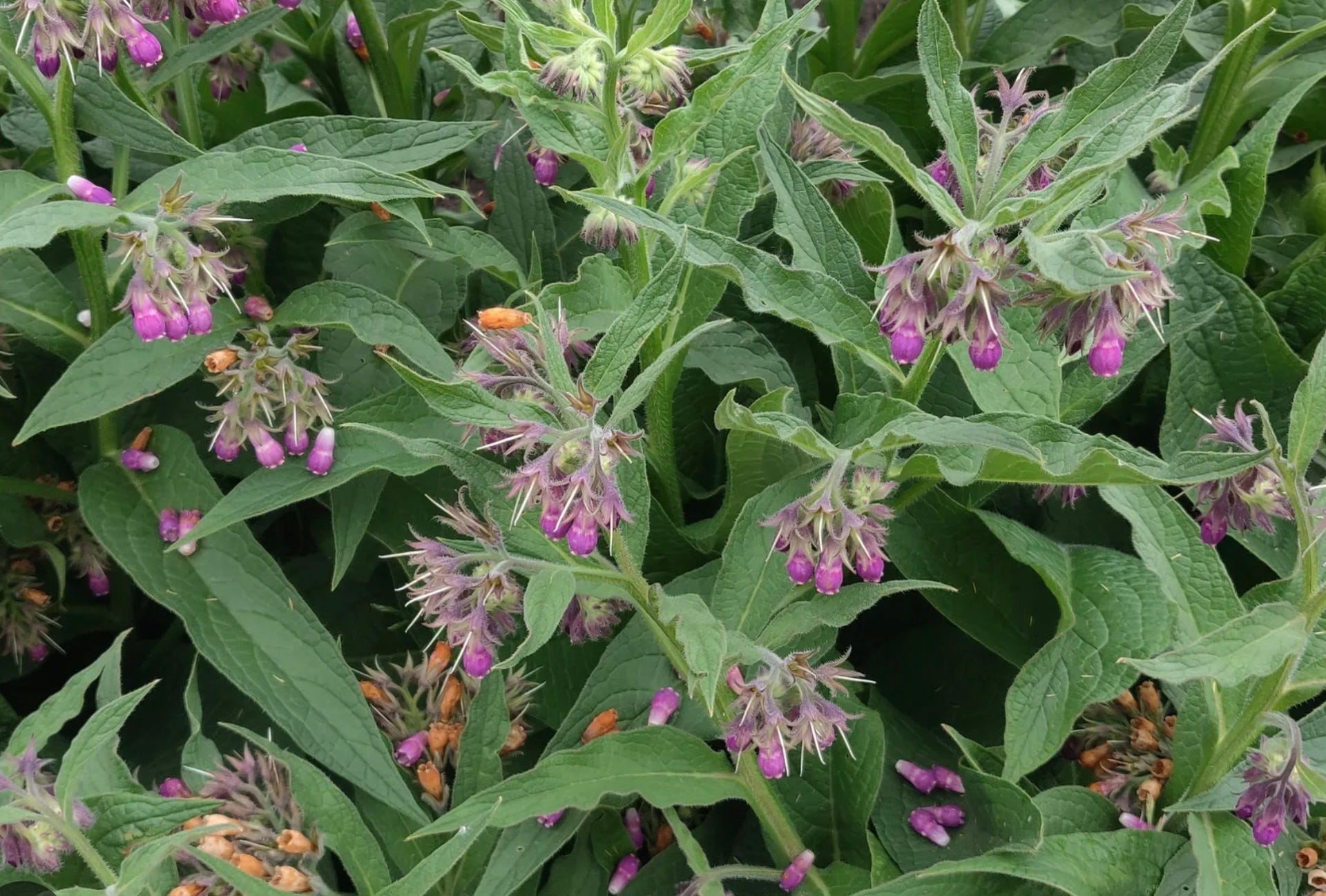
Growing Your Own Comfrey Patch: Easy-Peasy Nature Hack
Comfrey’s a perennial tough guy that laughs at poor soil. Plant once & harvest forever. It’s sterile in some varieties (like Bocking 14) to prevent spreading, but others seed out. Get root cuttings for quickest start as seeds need cold stratification.
Here’s the scoop:
Starting Out: Get root cuttings online or from a friend and plant 2-3 inches deep, 2-3 feet apart in rows. For seeds: Cold stratify in moist paper towel in fridge 30 days, then sow 1/4 inch deep outdoors in fall or start indoors 6-8 weeks before last frost.
Location and Care: Full sun to partial shade, moist but well-drained soil (loamy or clay ok). Water regularly first year, then it’s drought-tolerant. Hardy in zones 3-9, mulch for winter protection. Cut back after flowering for multiple harvests—up to 4-5 times a season!
Pro Tip: Plant where it won’t be disturbed remembering roots regenerate like crazy. Use Bocking varieties to contain it. Bees love the flowers, so it’s pollinator heaven.
Comfrey as Soil Superhero: Improving Your Dirt Naturally
Forget chemical fertilizers because comfrey’s a dynamic accumulator. It’s 6-8 foot taproots mine deep nutrients like potassium (2-3x more than manure), phosphorus, nitrogen, calcium, and more, then leaf drop or mulch recycles them topside.
It aerates compacted soil, boosts microbial life, and makes killer compost activator or liquid feed (chop leaves, steep in water for stinky tea fertilizer. Plant it around fruit trees or in guilds to enrich everything. It nature’s way to flip poor dirt into gold without the toxic amendments.
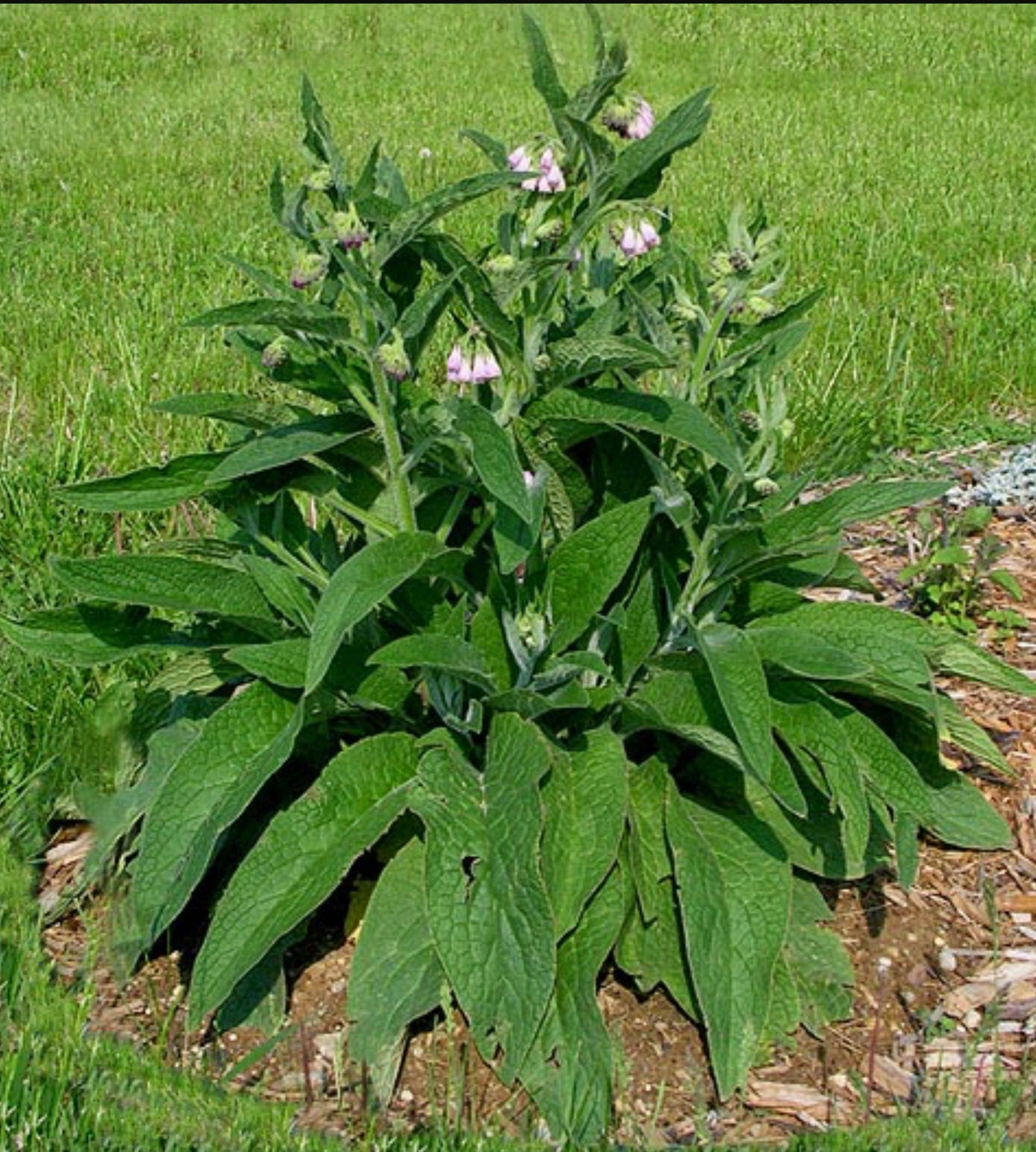
Comfrey’s Health Boost for Farm Animals: From Sheep to Chickens
Comfrey’s a homestead goldmine for livestock. It has high-protein (up to 26%), low-fiber feed that’s cheaper than soy and packed with vitamins A, B12, and minerals. Traditional farmers use it to cut feed bills and improve health.
Comfrey leaves are a go-to for new animal mamas like sheep, rabbits, or cows to help with uterine contraction back to normal. Old farm lore says it tones tissues and eases recovery, thanks to the astringent and healing compounds.
Studies on pigs and poultry show general vitality boosts, but specific uterine perks align with comfrey’s wound-healing rep. For humans? Traditional midwives have whispered about comfrey teas or sitz baths for postpartum toning.
Sheep and Goats: Love it fresh. It boosts wool & milk production, aids digestion, and heals wounds.
Rabbits: Leaves for gut health and growth; reduces feed costs by 50% in some setups.
Cows: Leaves support milk yield, bone health, and overall vitality. Cattle eat it dried too.
Pigs: Gobble fresh or wilted for protein punch; improves weight gain and replaces pricey concentrates.
Chickens: Chopped leaves or dried in feed for egg quality, immunity, and parasite resistance. Birds go nuts for it!
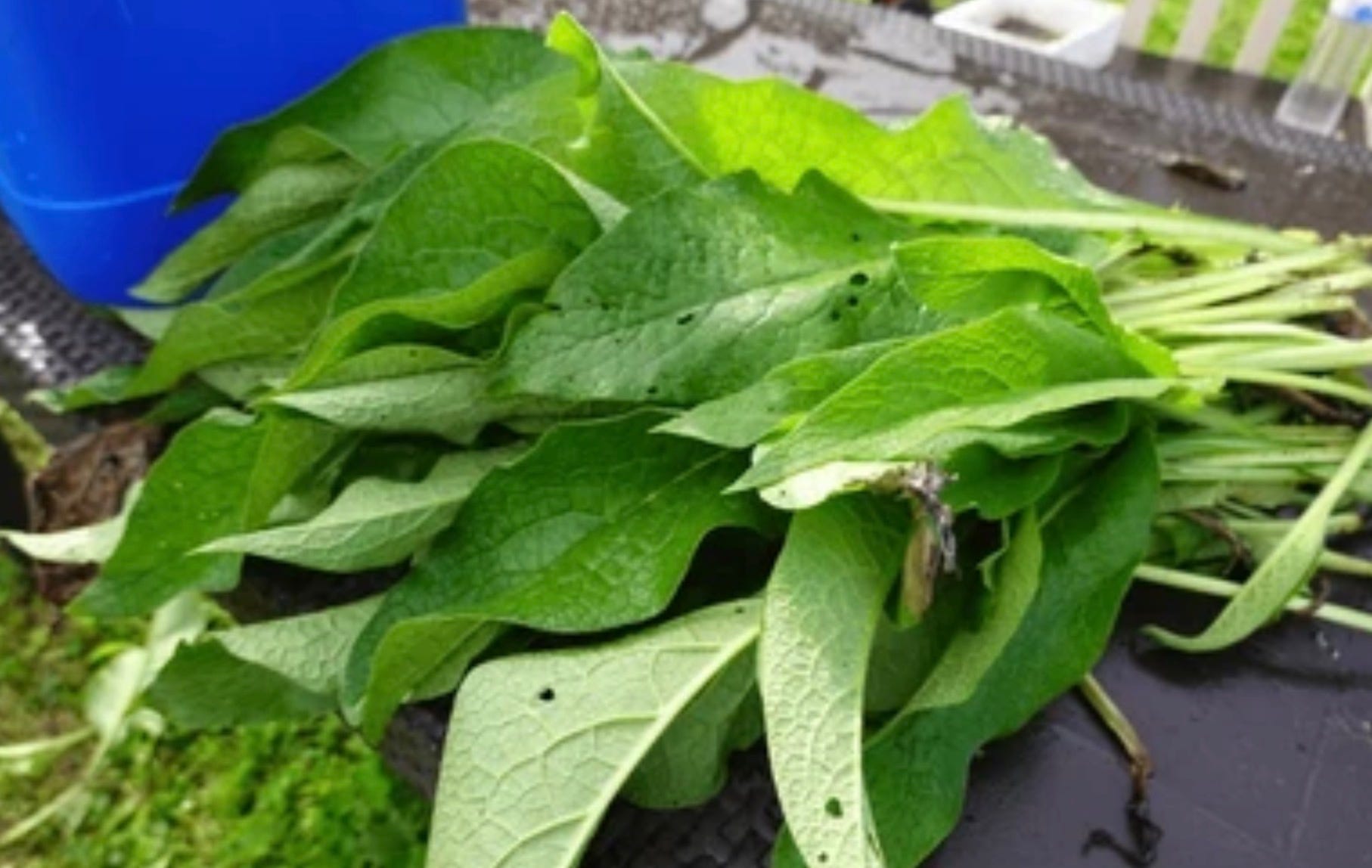
Extracting the Magic: DIY Natural Medicine from Comfrey
Teas/Infusions: Steep 1-2 tsp dried leaves/flowers in hot water 5-10 mins for soothing (external rinse or careful internal). Roots: Simmer chopped for 20 mins.
Tinctures: Chop roots/leaves; fill jar 1/2 with dried, cover with vodka. Steep 4-6 weeks, shake daily, strain. Dose: Topical or dilute for internal.
Oils and Salves: Infuse leaves/roots in olive/coconut oil (double boiler 1-2 hrs or solar 2-4 weeks), strain, add beeswax for salve.
Other Extracts: Poultices (blend fresh leaves), powders for capsules, or honey syrups. Start low, consult herbalist. For that stalk gel, just slice fresh stems lengthwise and scrape the inner mucilage. Use by itself or mix with a bit of oil for a quick topical goo.
Comfrey and COVID Spike Protein: Purging the Hidden Threat
Here’s where it gets establishment-shaking: Amid spike protein worries from COVID or the bioweapon shot, alternative sources tout comfrey leaves (and sometimes roots) for detox, citing general liver support to clear toxins. In detox guides, it’s listed alongside pine needles for neutralizing spikes, potentially inhibiting binding or flushing via anti-inflammatory paths.
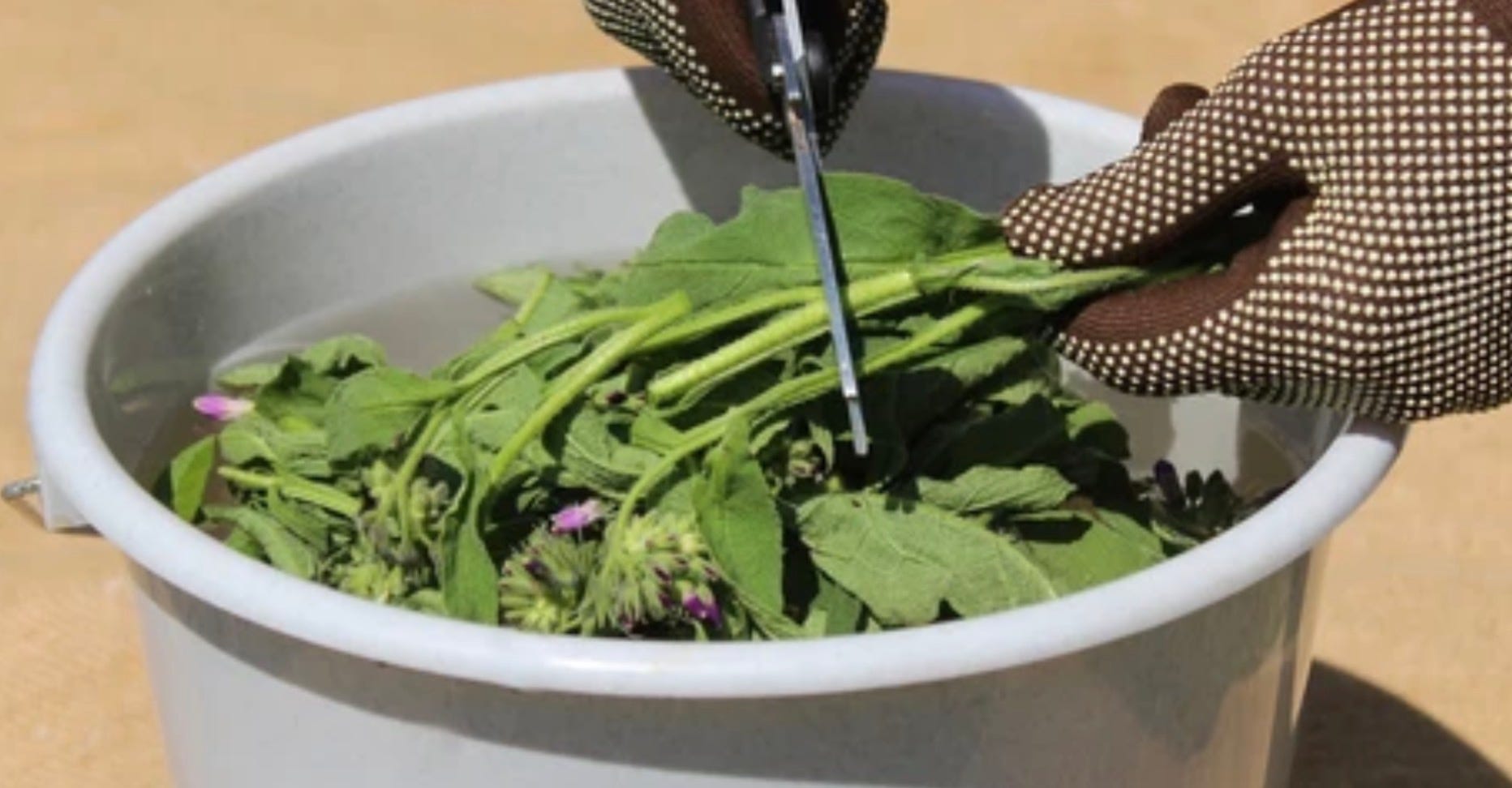
Recipes Galore: Turning Comfrey into Deliciousness (and Healing)
Comfrey Tea
Steep 1-2 tsp of dried comfrey leaves in hot water for 10-15 minutes, strain, and sip 1-2 cups daily (short-term only, per most herbalists). Add honey or lemon for flavor.
1. Digestive Woes and Gut Healing
• Issues Treated: Ulcers, gastritis, indigestion, leaky gut, or general tummy turbulence. It’s like a soothing balm for the inner lining, allegedly speeding up mucosal repair.
2. Respiratory and Throat Troubles
• Issues Treated: Coughs, bronchitis, sore throats, or sinus congestion. The tea is gargled or sipped to loosen phlegm and calm irritated airways.
3. Joint, Muscle, and Bone Aches
• Issues Treated: Arthritis, sprains, fractures, or general inflammation (though tea is internal support; external poultices are more direct). It’s thought to accelerate bone knitting and reduce swelling. This is comfrey’s signature! It’s name “knitbone” comes from legends of it mending warriors’ bones overnight.
4. Skin and Wound Healing (Internal Support)
• Issues Treated: Eczema, boils, or slow-healing wounds (tea drunk to boost overall regeneration from within).
5. General Debility, Fatigue, or Post-Illness Recovery
• Issues Treated: Weakness after sickness, anemia, or low vitality—rich in vitamins and minerals to rebuild strength.
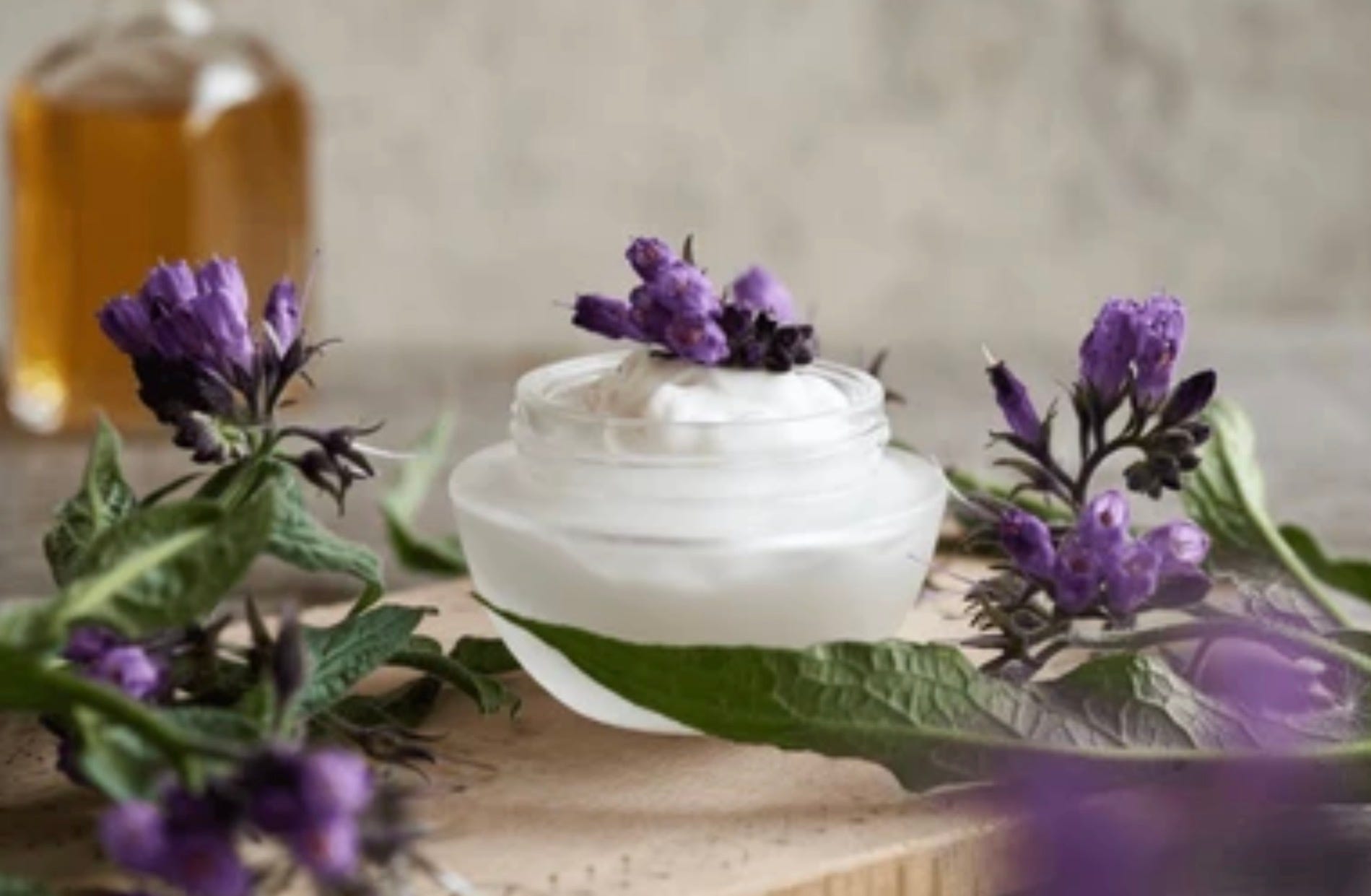
Comfrey Salve
Infuse chopped comfrey leaves/roots in warm oil for about 4-6 week, strain, melt with beeswax, and store in a glass jar. Anoint affected areas 2-3 times daily. Store in a cool spot.
Issues Comfrey Salve is Traditionally Used to Treat
1. Wounds, Cuts, Scrapes, and Abrasions
• Issues Treated: Minor cuts, punctures, burns, or post-surgical scars—applied to speed healing and prevent infection. As the ultimate “wound-weaver,” it’s believed to accelerate cell proliferation and soft tissue repair.
2. Sprains, Strains, Bruises, and Muscle Soreness
• Issues Treated: Twisted ankles, pulled muscles, black-and-blue marks, or general inflammation from overexertion. Rub it in gently to reduce swelling and ease pain.
3. Fractures, Broken Bones, and Joint Issues
• Issues Treated: Support for healing breaks, osteoporosis-related aches, or arthritis flare-ups. This is comfrey’s crown jewel! Legends claim it “knits bone to bone” by mineralizing tissues with silica and calcium components.
4. Skin Conditions and Irritations
• Issues Treated: Eczema, psoriasis, rashes, insect bites, or dry/cracked skin—massaged in to soothe and hydrate. It’s often used in beauty routines for “youthful glow,” believed to regenerate the skin and erasing scars and wrinkles.
5. Hemorrhoids, Varicose Veins, or Circulatory Discomfort
• Issues Treated: Swollen veins, piles, or poor circulation—applied gently to the area for relief and strengthening vessel walls. Comfrey salve is whispered about in folk circles as a “vein-vitalizer,” toning tissues with its astringent qualities.
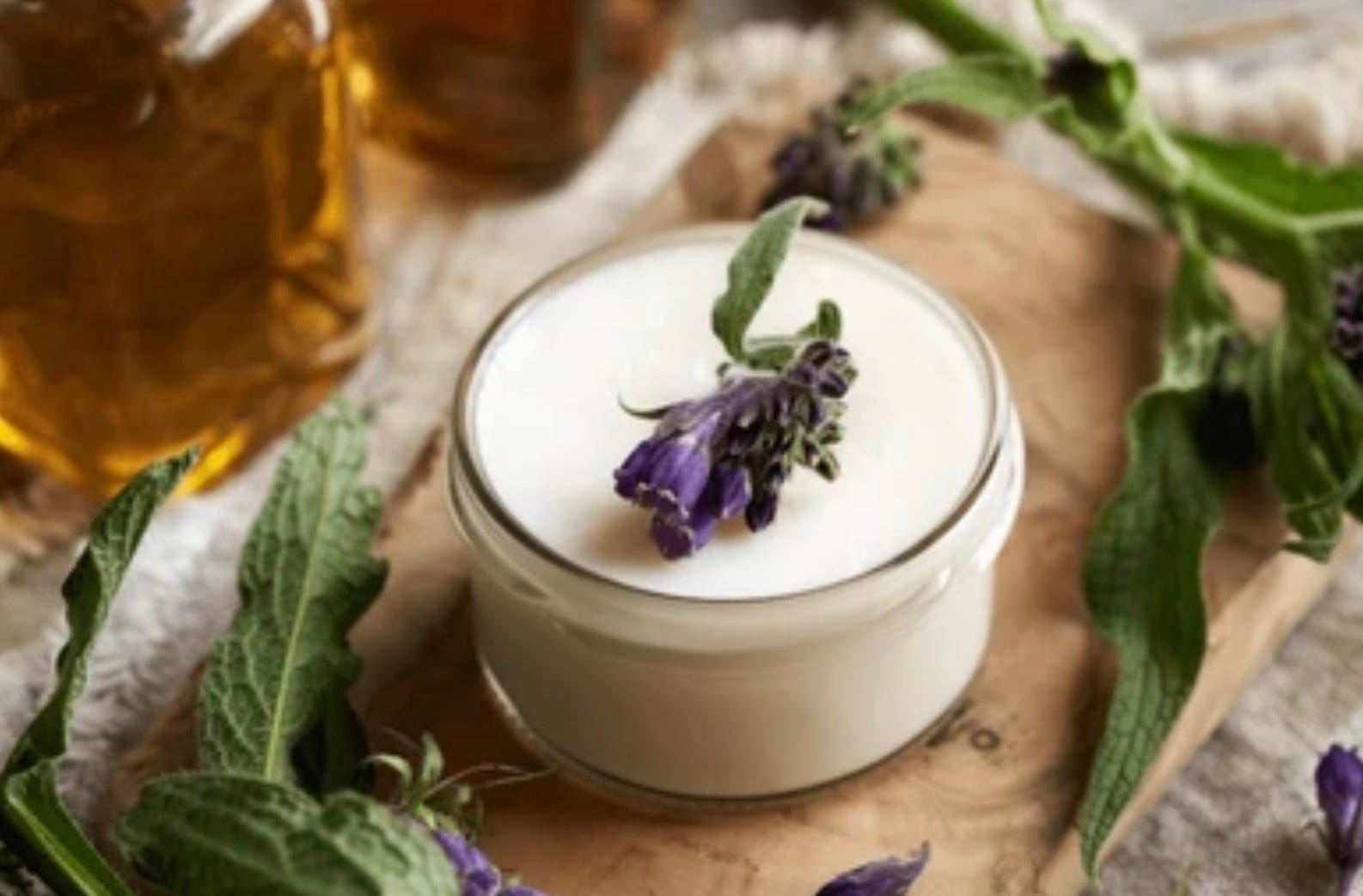
Comfrey Poultice
Harvest fresh or use dried comfrey, mash with a mortar, mix with a bit of water or oil for paste, spread on cloth, and bind to the area for 20-60 minutes. Repeat several times a day for painful injuries.
Issues Comfrey Poultice is Traditionally Used to Treat
1. Sprains, Strains, and Soft Tissue Injuries
• Issues Treated: Twisted joints, pulled muscles, tendonitis, or sports mishaps—wrapped on to reduce swelling and speed recovery.
2. Bruises, Contusions, and Swelling
• Issues Treated: Black-and-blue marks, edema, or impact injuries—applied fresh to draw out fluids and fade discoloration.
3. Fractures and Bone Breaks (Supportive)
• Issues Treated: Healing support for cracks, breaks, or osteoporosis aches (alongside casts or medical care)—poultice over the area to encourage bone mending. Legendary for “setting bones overnight” in warrior tales!
4. Wounds, Burns, and Skin Abrasions
• Issues Treated: Cuts, scrapes, minor burns, or ulcers—laid on to promote closure and prevent scarring.
5. Joint Inflammation and Arthritic Pains
• Issues Treated: Rheumatism, gout flares, or chronic joint stiffness—poultice warmed and applied for soothing penetration.
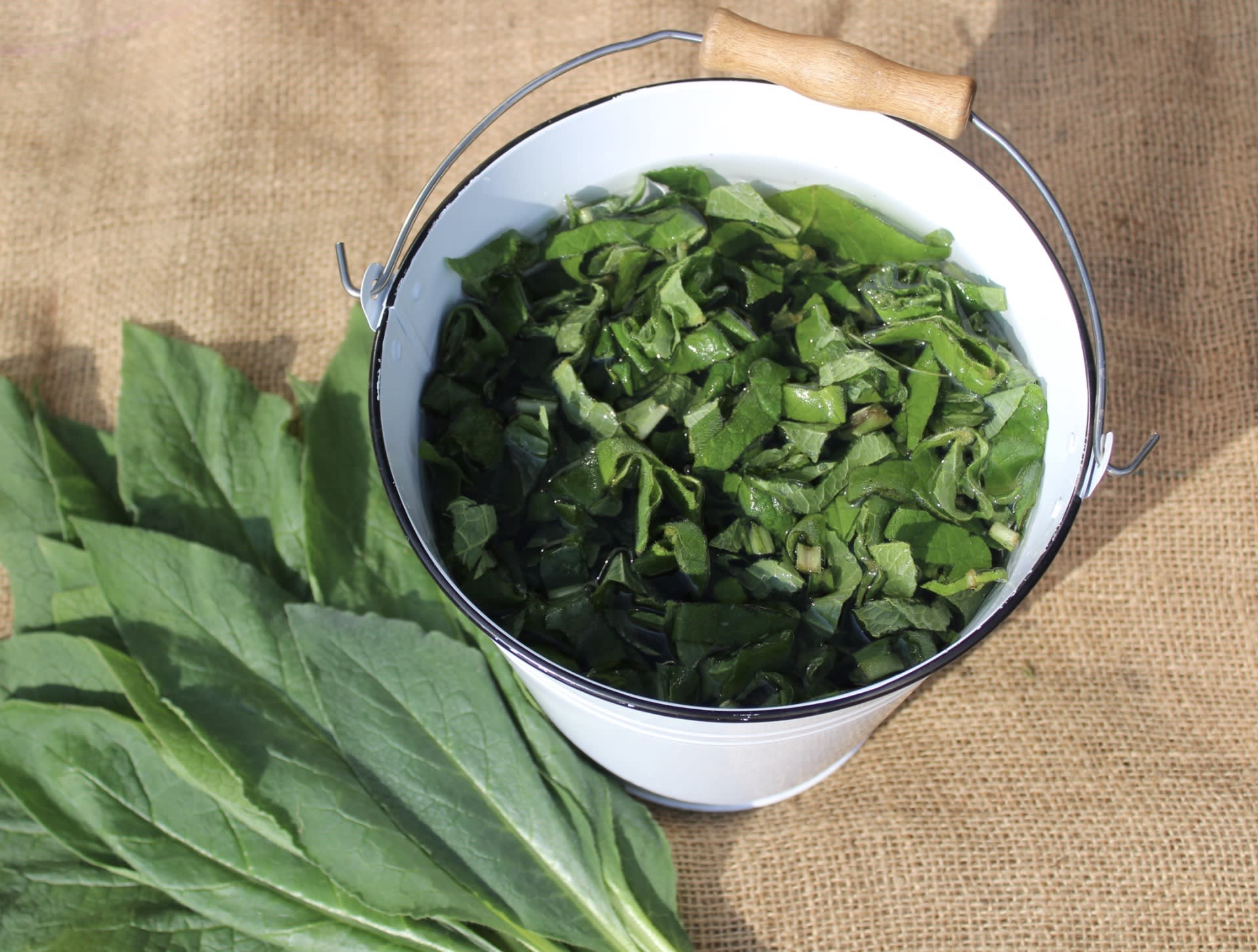
Liquid Fertilizer
Comfrey is the ultimate giver and is the best fertilizer you can use bringing the plant full circle from earth, to the dinner table, to the medicine cabinet, fed to animals and then back to the earth.
How to Make Comfrey into a Fertilizer
Transforming comfrey into fertilizer is a super easy and is best done in spring or summer when the plant’s energy peaks (harvest leaves under a waxing moon for max potency). Use established plants to avoid depleting young ones. Comfrey’s perennial nature makes it a generous giver, regrowing vigorously. Here are the classic methods:
1. Comfrey Liquid Feed (The “Green Tea” Elixir – Easiest and Most Potent)
• Why This Form? This anaerobic brew extracts soluble nutrients into a potent “plant blood” tonic, like distilling the earth’s essence for quick uptake.
• How to Make It:
• Gather 2-3 lbs of fresh comfrey leaves (no flowers or stems for purity- use those for salves and other recipes)
• Chop roughly and stuff into a 5-gallon bucket (fill halfway). Cover with water
• Seal loosely (it’ll ferment and smell like strong cheese- the fermentation is where the fertile properties pop) and let steep in a sunny spot for 2-3 weeks, stirring daily with a wooden spoon. Strain through cloth (compost the mush)
• Dilute 1:10 with water (it’ll be dark and stinky—add a splash of molasses for microbial boost).
• Application: Apply to soil or as a foliar spray every 2-4 weeks during growing season. Use it on tomatoes or greens for explosive growth. It’s like rocket fuel for your garden!
2. Comfrey Compost Activator (The “Soil Weaver” Mulch)
• Why This Form? It supercharges your compost pile, knitting organic matter into rich humus faster.
• How to Make It: Layer chopped comfrey leaves (1-2 inches thick) into your compost bin or pile, alternating with greens/browns. Let it break down over 4-6 weeks, turning occasionally.
• Application: Spread the finished compost around plants’ bases, perhaps during a full moon to amplify nutrient release. For enhancement, infuse with nettle for a nitrogen-kick duo, creating a “herbal alliance”.
3. Comfrey Mulch or Chop-and-Drop (The “Living Blanket” Method)
• Why This Form? Fresh leaves act as a slow-release blanket, suppressing weeds while decomposing into nutrient gold.
• How to Make/Use It: Simply cut leaves and lay them 2-4 inches thick around perennials or in paths. Let them wilt and integrate—no processing needed.
Safety note: Comfrey can accumulate heavy metals from soil, so grow it in clean spots. It’s non-toxic for gardens but keep away from edible roots like carrots (surface-level only). Plant it as a “fertilizer factory” border in your landscaped areas.
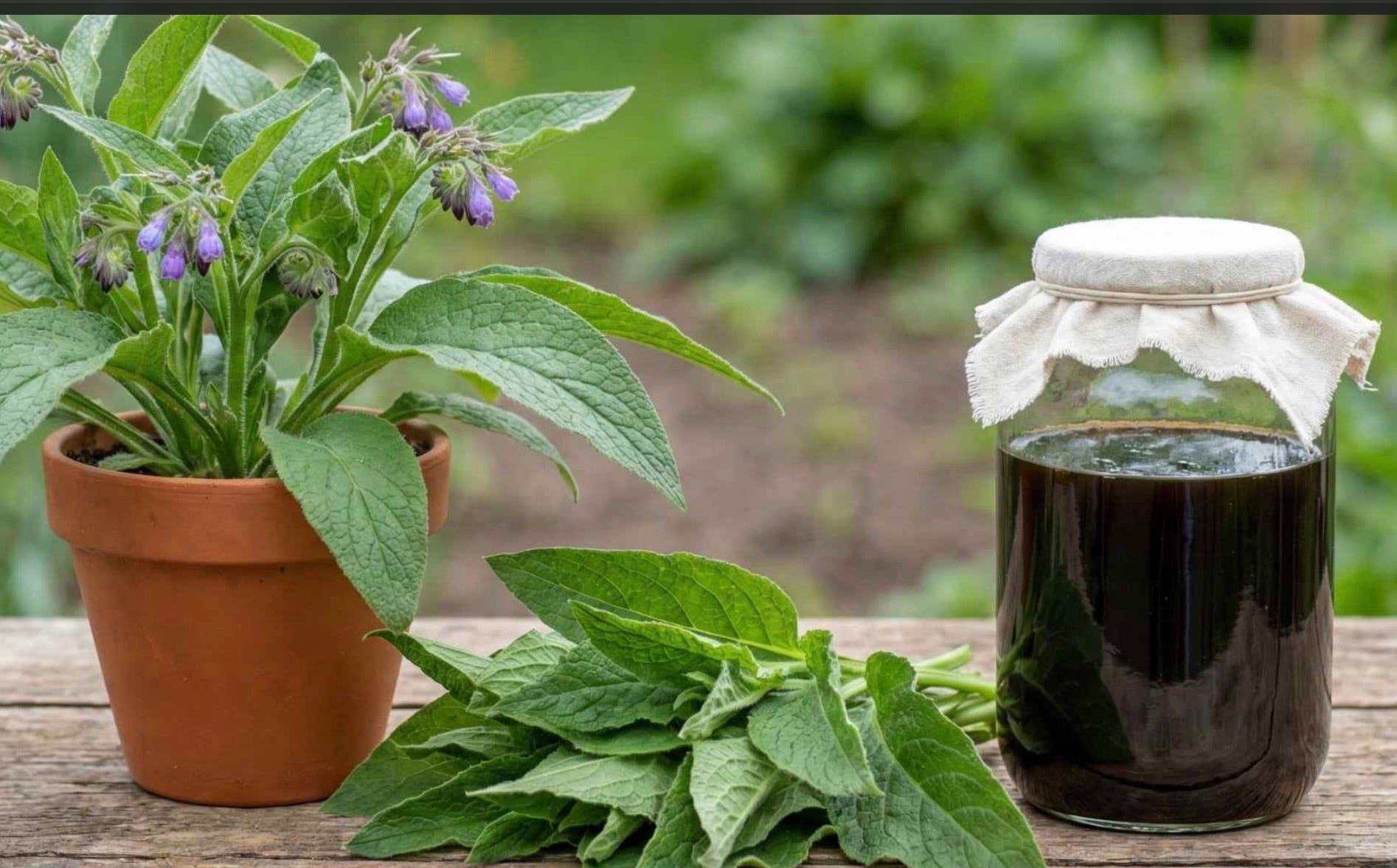
Other Comfrey Recipes
Comfrey Oil: Simmer grated roots in coconut oil 1-2 hrs, strain for massage.
Comfrey Cream: Mix tincture with shea butter & beeswax for joints.
Sautéed Leaves: Cook young leaves like spinach with garlic/oil—gut soother.
Comfrey Balm: Infuse flowers/leaves in oil, add beeswax/essential oils.
Comfrey-Plantain Salve: Combine leaves with plantain for extra skin heal.
Infused Honey: Steep flowers in honey for cough syrup.
Comfrey Ointment: Crush leaves in jar, cover with oil, water bath 1-1.5 hrs.
Lavender Comfrey Hand Salve: Infuse 1/2 cup dried leaves in 1 cup olive oil 4-6 weeks, strain, melt with 1/3 cup beeswax and 1 tsp lavender essential oil. Soothes dry hands or minor cuts.
Arthritis Relief Salve: Mix comfrey-infused oil (1 cup) with beeswax (1/4 cup), add cayenne or ginger for warmth. Rub on achy joints for circulation without pills.
Cooling Comfrey Balm: To basic salve, add 10 drops chamomile and peppermint EOs. Perfect for bruises or hot spots.
All-Purpose Healing Ointment: Blend comfrey root tincture into shea butter base; great for abrasions or bug bites.
Comfrey Ointment: Heat 8 tbsp olive oil and 8 tbsp coconut oil, add handful fresh leaves, simmer low 30 mins, strain, add beeswax. Old-school basic.
Comfrey Skincare Salve: 1 cup infused oil, 1/4 cup beeswax, 10 drops lavender essential oil - nourish and heal dry skin or rashes.
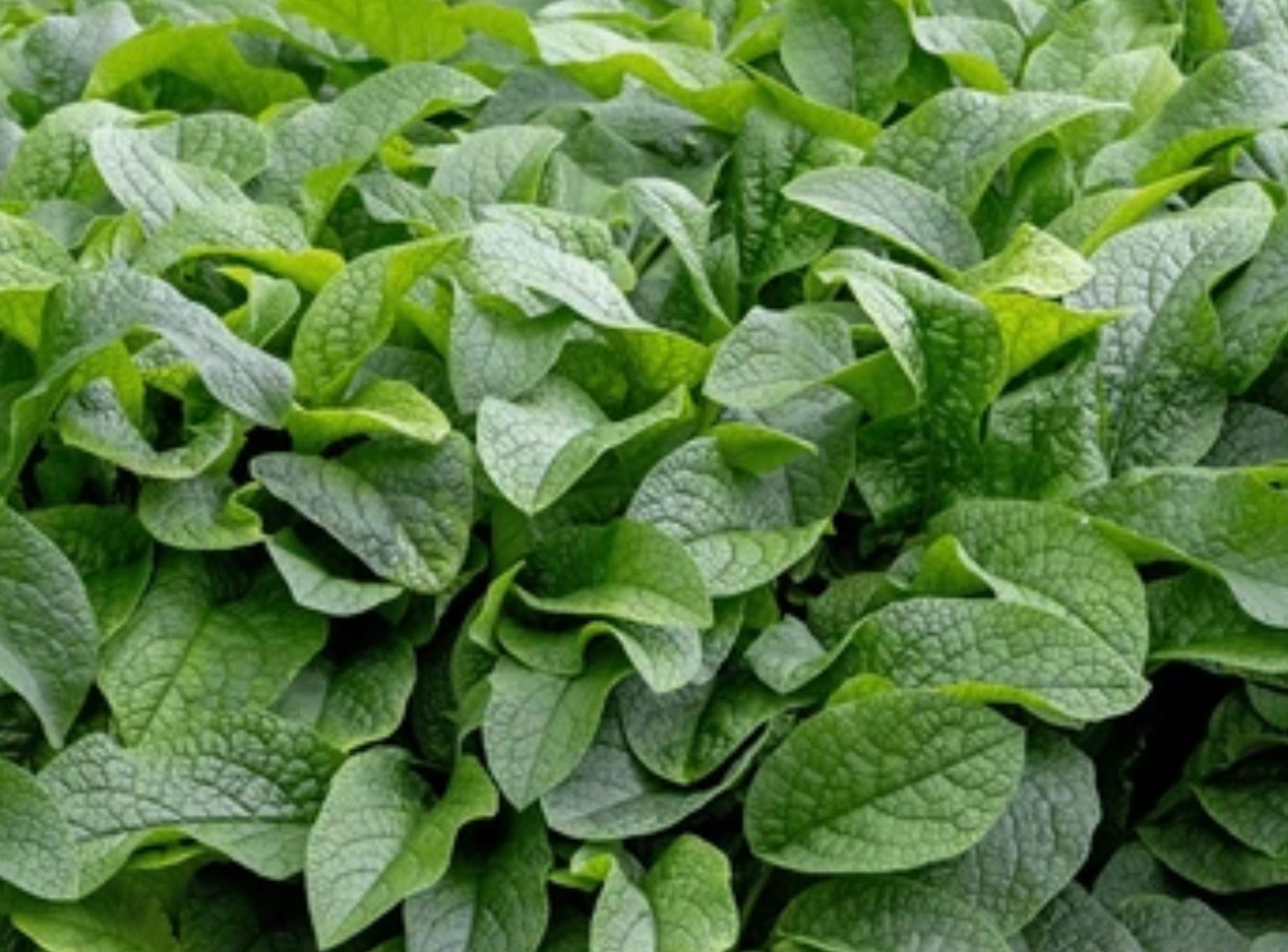
Comfrey is something I grow here on the farm and it is super simple. I started with a few cuttings I bought from Amazon and now it has spread over 3 years to dozens of plants.
It doesn’t require any additional water and maintains itself without any extra work. The plant is big and pretty and makes a great addition to landscaped areas.
I cut leaves to feed the animals mostly. There isn’t an animal that doesn’t love the treat. The rabbits especially love it.
Fun fact- Comfrey is the only plant based source of vitamin B12. And comfrey leaves contain 4-6% potassium (dry weight), rivaling or exceeding banana peels or potatoes, but uniquely paired with its other minerals for balanced uptake. Shallow plants like tomatoes grab surface potassium, but comfrey’s roots access deeper reserves, preventing the “nutrient fatigue” seen in over-farmed soils. It’s a potassium powerhouse without the sugar crash of fruits.
I use the gel from the stalks on all skin issues. And the rough leaves will scratch the itch right out of poison ivy. I haven’t yet made any products with it yet but I will soon.
Comfrey is a low maintenance plant that looks pretty, has medicinal properties galore, is great for skin and cosmetics, animals love it, and we can use it for recipes to eat.
Oh! And it smells like the cucumber melon scent at Bath and Body Works!
Comfrey can grow in planters or in landscaped areas. It is seriously the easiest thing I have ever grown. It comes back every year bigger than the last. It is one of the first green leaves to pop up in the spring and one of the last to go to sleep for the winter.
Do you grow comfrey? Have you used any comfrey products? If not, I encourage you to try!
I actually did get a cutting from someone a couple of years ago! I just need to put some of these recipes to use in your article. I hope to dry it and also make an oil with it. Great article and recipes!
I admit I’ve not used comfrey yet, despite the fact I have an entire cupboard full of other dried herbs for preparations. I had shied away from using it internally during the years of my herbal studies, due to FDA warnings, so I ended up focusing on other herbs. Your great blog has convinced me I need to grow it here on our property and discover ways to use it for our health and first aid—I get poison ivy every year, so I’m excited about the use of comfrey. Thank you for such a comprehensive report on comfrey!