

Exploring Malta’s Ancient Underground Sound Temple That Bends Reality
The 110 Hz Portal?

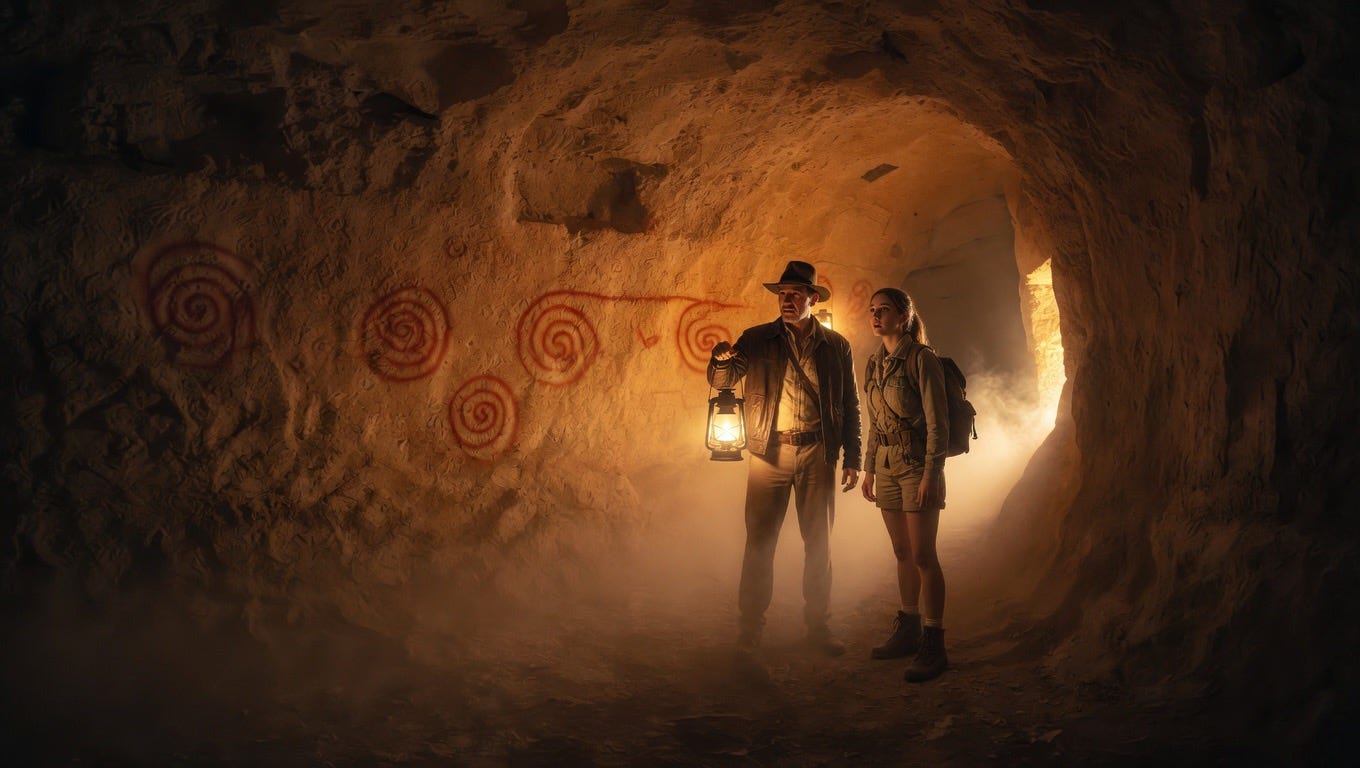
Hey, fellow explorers! Tuesday is our expedition day! Dust off your adventure hat and join me on a journey that feels straight out of an Indiana Jones flick! We’re heading deep underground into the Hypogeum of Ħal-Saflieni in Malta - a mind-blowing, 5,000+ year old subterranean temple carved entirely from solid limestone. No flashy gold statues or booby traps (that we know of), but trust me, the vibes here are pure “forbidden knowledge”. It’s like the ancients built a secret sonic lab for altering reality itself.
This is going to be epic! I’m super drawn to the mystery of how all of these ancient structures are literally designed to resonate at specific frequencies. Think of that! Building structures in a way to make them resonate at specific frequencies is next level!
Let me set the scene: We’re a tight knit crew of like-minded seekers, lanterns in hand, stepping off the bustling streets of modern Paola, Malta. Above ground, it’s all sunny Mediterranean charm - but beneath? A labyrinthine world of echoing chambers, swirling red-ochre art, and acoustics that could drop you into a trance.
Let’s dive in together, level by level, and uncover what these prehistoric geniuses left behind. Who were they? Why build this? And what does a specific hum at 110-111 Hz reveal about the hidden frequencies of our own reality?
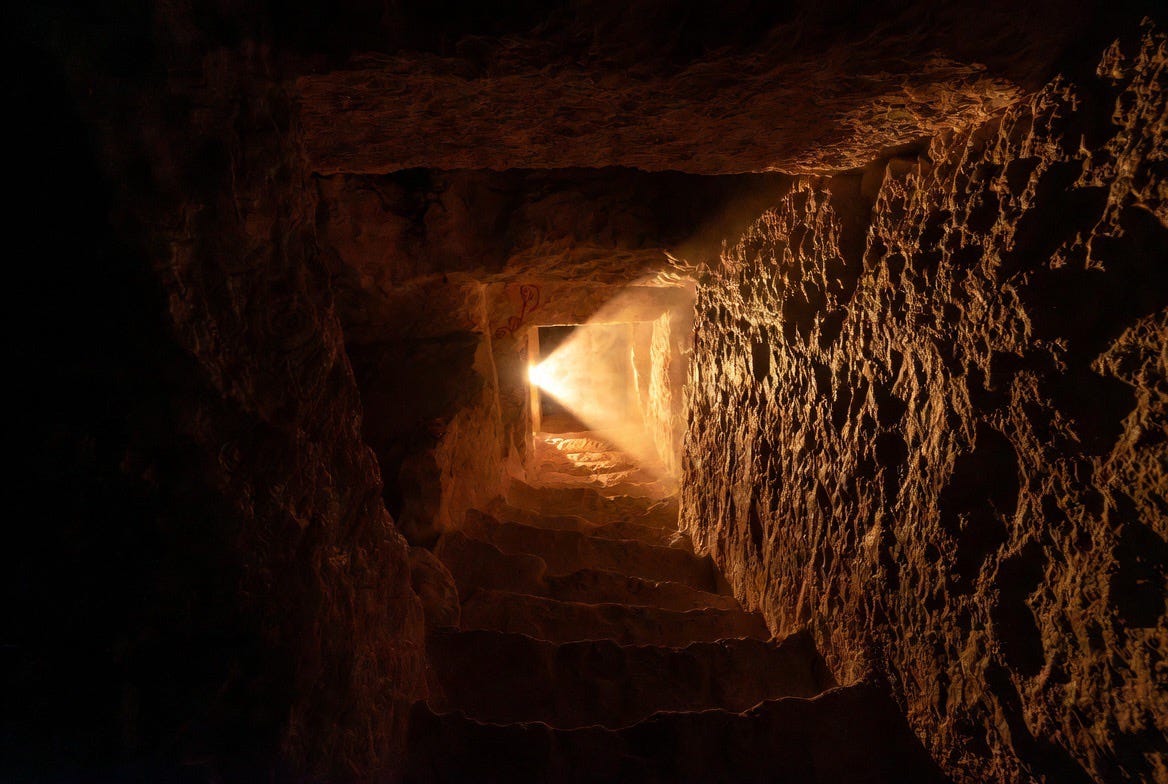
Imagine squeezing through narrow passages where the air grows cooler and heavier with every step, your flashlight beam dancing across walls that were hand carved with nothing but antlers, flint, and obsidian tools over 5,000 years ago.
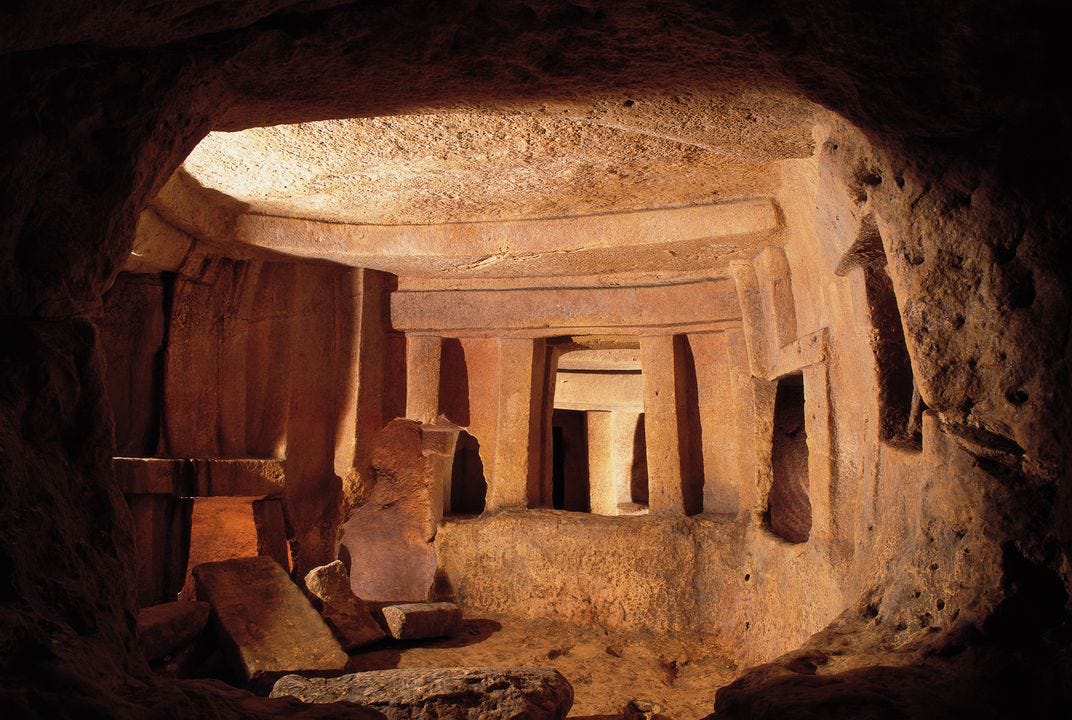
The entire complex spans three interconnected levels hewn from soft globigerina limestone, mimicking the above ground megalithic temples in perfect detail - trilithon doorways, corbelled ceilings, and false bays that scream architectural genius. It’s not just a hole in the ground; it’s a deliberate underground recreation of their sacred surface world, complete with pits, niches, and shelves that once held offerings or bones.
As we venture deeper, the sheer scale hits you. Over 1,600 square feet of chambers connected by steps, lintels, and winding corridors, all excavated by a society that arrived on an empty Malta around 5000 BC.
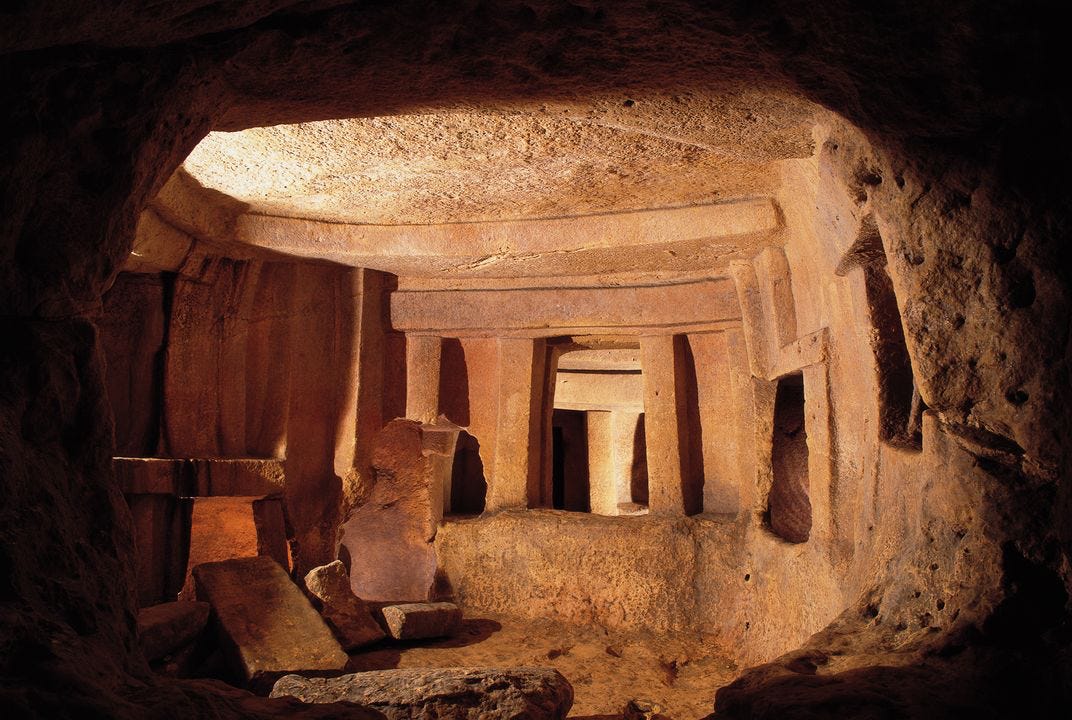
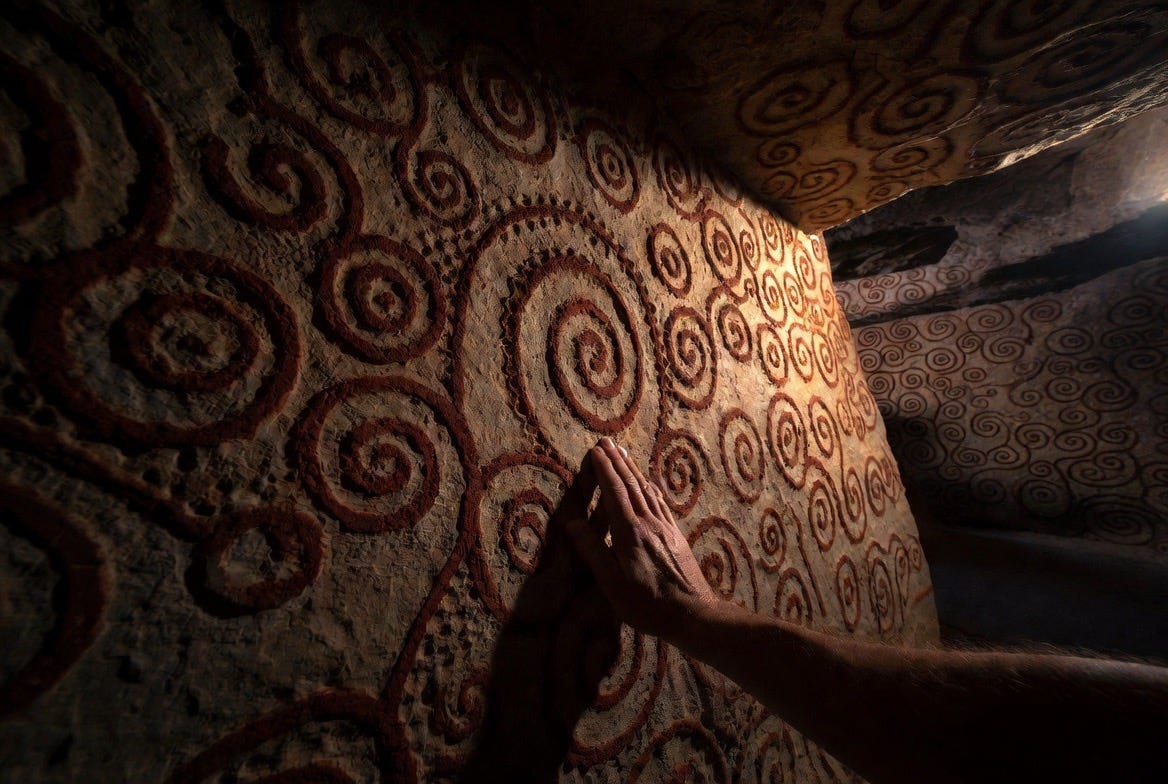
These weren’t rough cave dwellers; they were master engineers who used giant stone spheres as ball bearings to roll massive blocks into place, creating a womb-like sanctuary that feels alive even today. Fresh paint strokes in red ochre with spirals, honeycombs, and geometric patterns adorn ceilings in select rooms. They are the only prehistoric paintings on the entire island, hinting at rituals tied to the earth mother or cosmic cycles.
And then there’s the human touch: thousands of bones dusted in red ochre, arranged in fetal positions like they were returning to the earth’s embrace. Artifacts are scattered everywhere. Intricate pottery shards, shell buttons, clay beads, carved stone animals, and those iconic “fat lady” figurines paint a picture of a vibrant culture obsessed with fertility, death, and rebirth. This place wasn’t just built; it was lived in, sung in, and dreamed in for over 1,500 years.
First Stop: Where in the World Are We, and Who Carved This Masterpiece?
Malta’s a tiny island gem in the Mediterranean, just south of Sicily, and the Hypogeum sits right in the heart of Paola, overlooking the Grand Harbour of Valletta. It’s not some surface ruin you stumble upon. This is the world’s only known prehistoric underground temple, a UNESCO World Heritage Site hewn from rock starting around 4000-3600 BC and used for over 1,500 years until roughly 2500 BC.
The builders were the Maltese Temple Culture folks. Neolithic people who showed up on an apparently uninhabited Malta around 5000 BC. These weren’t cave dwellers scraping by; they were master stone carvers who also erected those jaw dropping above ground megalithic temples like Ħaġar Qim or Mnajdra.
We are told they worked with basic stone tools, yet excavated hundreds of tons of rock to create a three level complex mimicking their surface shrines with trilithon doorways, corbelled ceilings, and false bays. Fresh detail most tours skip? They even used giant stone spheres as primitive ball bearings to haul massive blocks! Ancient advanced engineering at its finest!
Digging even deeper into who these people really were reveals a sophisticated Neolithic society of farmers and artisans who thrived on a diet heavy in cereals, possibly supplemented by seafood and early domesticated animals, judging from bone remains and nearby settlement clues.
They arrived likely from Sicily or nearby regions (some link them to the Sicani), bringing advanced pottery techniques and a passion for monumental building that set them apart from other prehistoric groups. No evidence of kings or strict hierarchies here. It seems like a collaborative culture where everyone pitched in on these massive projects, perhaps driven by shared spiritual beliefs or the need to manage scarce island resources like water and arable land.
What makes their story so intriguing is how they blended practical survival with profound creativity: figurines of reclining goddesses (like the Sleeping Lady) suggest a fertility cult centered on the earth mother, while animal carvings hint at totemic or shamanic practices.
They didn’t just build; they engineered spaces for the living to commune with the dead, turning the underground into a mirror of their above ground temples. And yet, for all their ingenuity, they left behind almost no written records. Just these silent stone chambers whispering secrets through the ages.
Their disappearance around 2500 BC adds another layer of mystery. Was it gradual resource strain from overbuilding, a shifting climate drying up the islands, or a spiritual evolution that rendered these structures obsolete?
Whatever the case, the Temple Culture faded quietly leaving us to wonder if they migrated, assimilated, or simply chose a new path - their legacy now preserved in this incredible underground marvel that feels like it was waiting just for explorers like us.
Our Virtual Tour: Descending Like True Adventurers
Alright team - hard hats on, voices low. We squeeze through the modern entrance. The original was lost to 20th-century construction; it was accidentally rediscovered in 1902 by builders digging a cistern). Down we go, level one: dim, intimate burial chambers where the earliest interments happened. The air feels thick, cool, and ancient. Limestone walls glowing under soft lights, carved to look like the megalithic temples above. No fancy hieroglyphs, just raw, hand-hewn precision that screams dedication.
The upper level, the oldest part dug into a natural hollow on a hillside, features a central passage leading to five low roofed burial chambers carved from pre-existing caves, some still holding original grave deposits with bones neatly arranged amid personal ornaments.
It’s like stepping into the very first phase of their underground vision. Practice yet sacred, where funerary processions likely began under open sky before the space was fully enclosed. Pits in the floor once held valuables, and the whole area feels intimate, almost womb like, with smooth walls and simple alcoves that once cradled the dead in red ochre.
Pushing onward to the middle level, we enter the most ornate section where the architecture truly shines: a roughly circular Main Chamber surrounded by trilithon arches leading to side rooms, its walls washed in red ochre and echoing the surface temples perfectly.
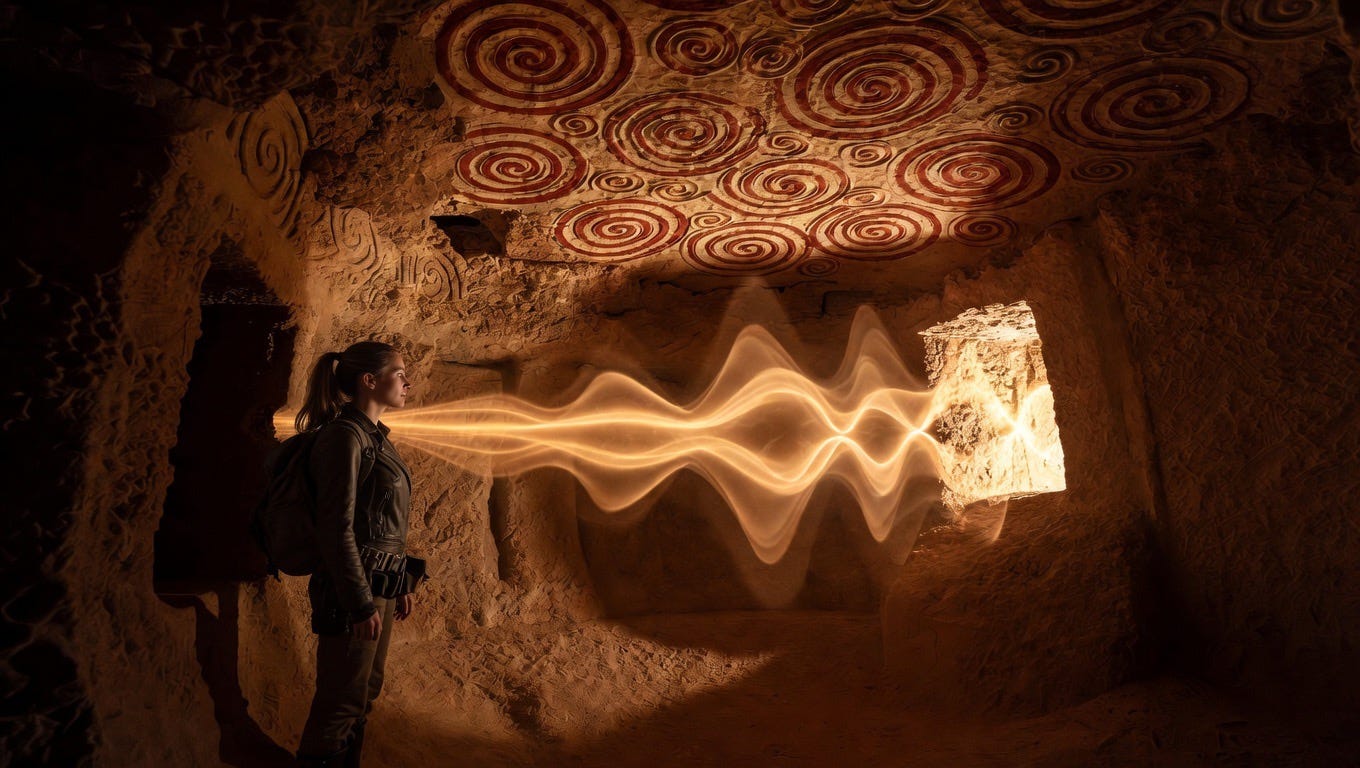
Here, the Decorated Room stands out with its inward slanting walls covered in swirling red-ochre spirals and honeycomb patterns, the island’s only prehistoric paintings possibly symbolizing energy flows or trance visions tied to the site’s acoustics.
And get this! There is a section called the Holy of Holies! Like Karnak! This makes me wonder how many structures had them! Malta’s is a small temple with a corbelled roof and porthole like openings.
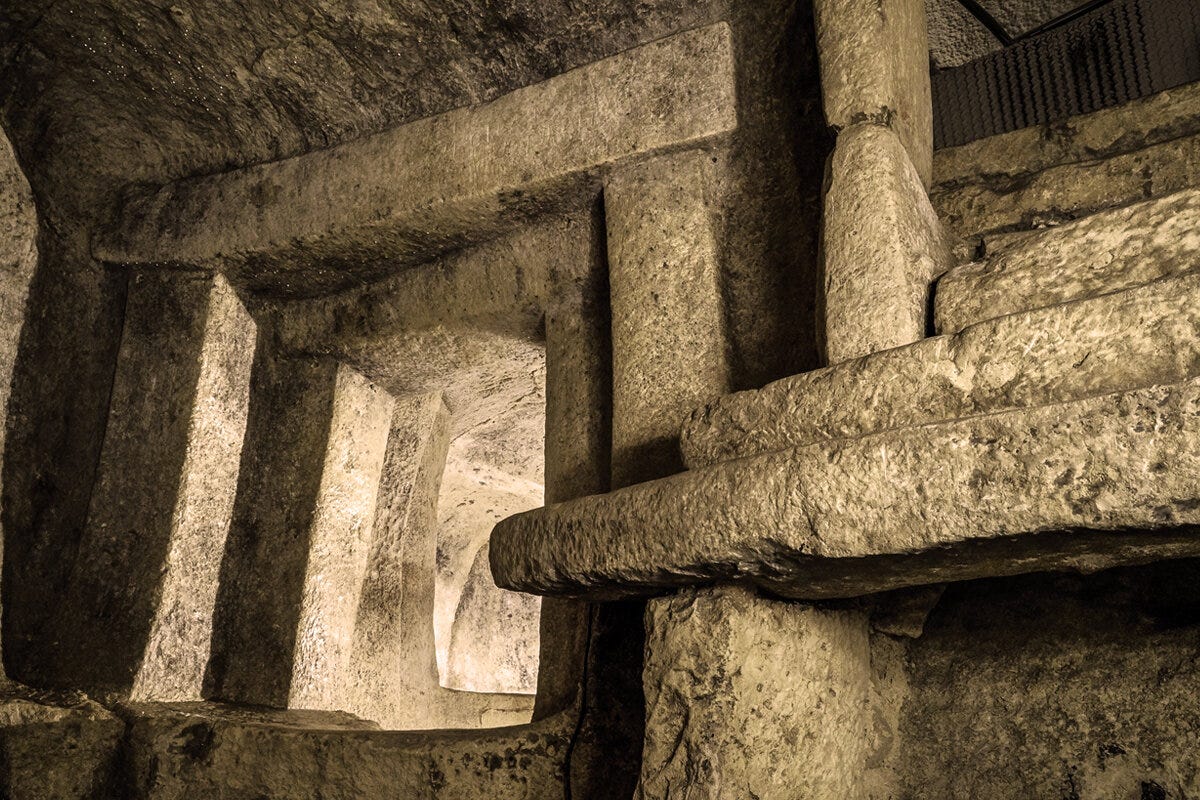
The lower level takes us even deeper, 10.6 meters below ground via seven steps from the Holy of Holies, into a network of five small chambers (each under five meters across) serving as mass graves with side niches packed with remains from thousands of individuals.
Humidity has claimed most bones over time but what survives is fetal positioned skeletons with beads, amulets, and pottery tells of mass depositions and ongoing rites long after initial burials. The hallways with the deliberate carving, the echoing silence broken only by our whispers, makes us feel like we’re walking in the footsteps of priests, oracles, or initiates who once filled these halls with song and ceremony.
As we’re still catching our breath from wandering those echoing lower chambers packed with fetal position skeletons and red ochre rituals, let’s shine our lanterns on one of the Hypogeum’s most jaw dropping (and least-talked-about) discoveries: the elongated skulls!
Back in the early 1900s when Sir Temi Zammit first excavated the site, his team pulled out the remains of over 6,000-7,000 people but a handful of the skulls stood out dramatically. Zammit himself described them as “of the long headed type” (dolichocephalic), with noticeably stretched craniums that looked almost otherworldly compared to typical Neolithic skulls.
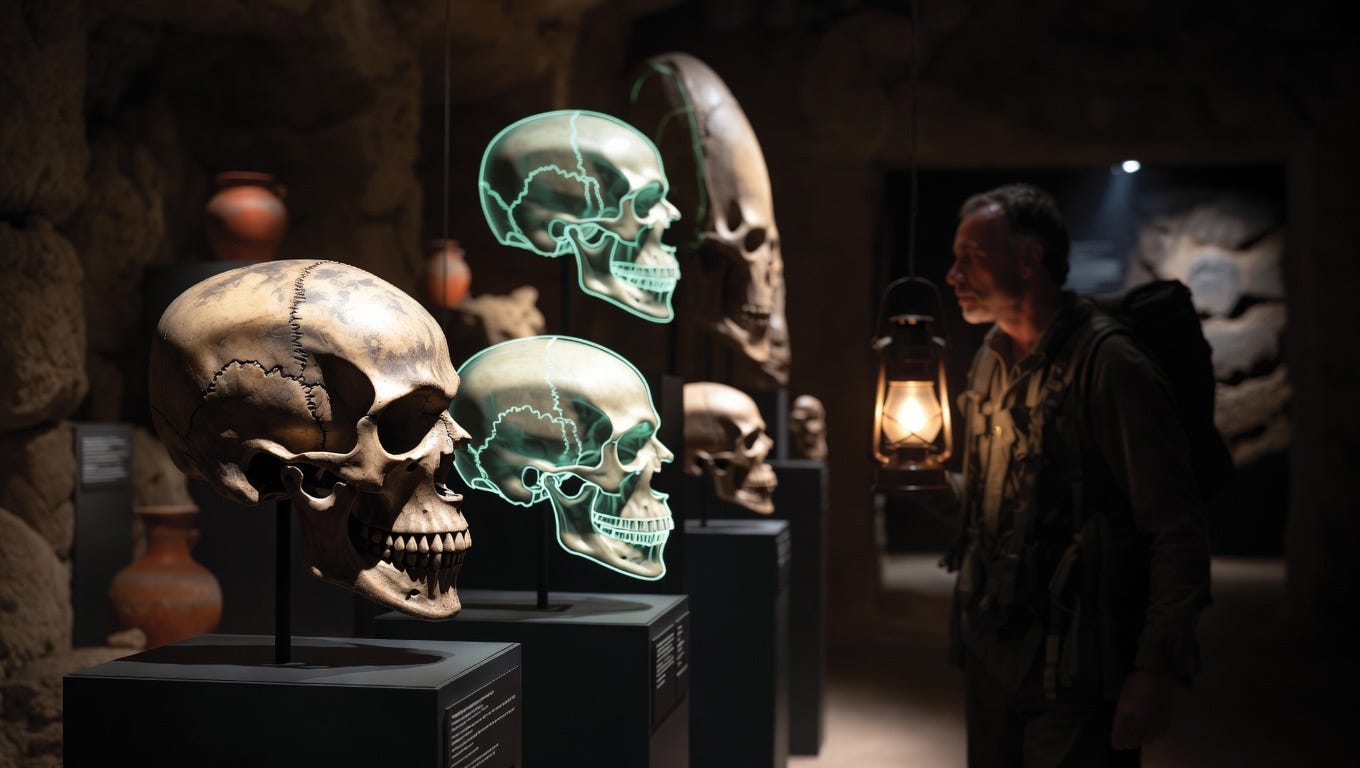
One even lacked the median sagittal suture - the natural seam that usually runs down the top of the skull - as if the bone had grown in one continuous, elongated dome.
Only about six to eleven of these skulls survived the damp conditions that turned most bones to mush; the rest crumbled away before they could be fully studied. Today, a few are on proud (and slightly eerie) display at Malta’s National Museum of Archaeology in Valletta as part of the “Alien Headaches? The Hypogeum Skulls Enigma” exhibition.
Forensic folks have examined them closely. No signs of artificial cranial deformation like the head binding practices seen in Peru or ancient Egypt. Some researchers point to natural genetic variation or conditions such as craniosynostosis where skull sutures fuse too early, forcing the brain and bone to grow longer instead of wider.
Either way, these weren’t your average island farmers - this population carried a distinctive head shape that makes you wonder if they were a special lineage chosen for ritual roles, or if the isolated Mediterranean environment shaped them over generations.
Theorizing time around our virtual campfire: what if these elongated skulls weren’t just a random trait but tied to the Hypogeum’s whole frequency vibration mission? Could a longer cranium have amplified certain resonances or made the 110 Hz trance states even more powerful for the people who spent time chanting in the Oracle Chamber?
Some wilder ideas floating in explorer circles suggest possible ancient migration links. Maybe a small group with unique genetics arrived from North Africa or beyond, carrying knowledge of sound tech and sacred spaces. Or was it something even deeper about human potential?
Whatever the truth, these skulls add another layer of “forbidden knowledge” mystery to the place. Proof that the builders weren’t just carving rock. They were a people whose very bodies might have been tuned to the same vibrational secrets we’re still trying to unlock today.
The Oracle Chamber’s Secret Frequency: 110-111 Hz and the Brain on Ancient Vibes
Acoustic studies from the 2010s (Debertolis, Till, and others) confirm the Hypogeum was designed for ritual sound. EEG lab tests on volunteers exposed to 110 Hz show wild brain shifts: the left prefrontal cortex (language, logic) dials down, while the right side (emotion, intuition, creativity) lights up. It’s linked to hypnagogic states - that dreamy half awake zone with vivid imagery, empathy boosts, and even mild hallucinations.
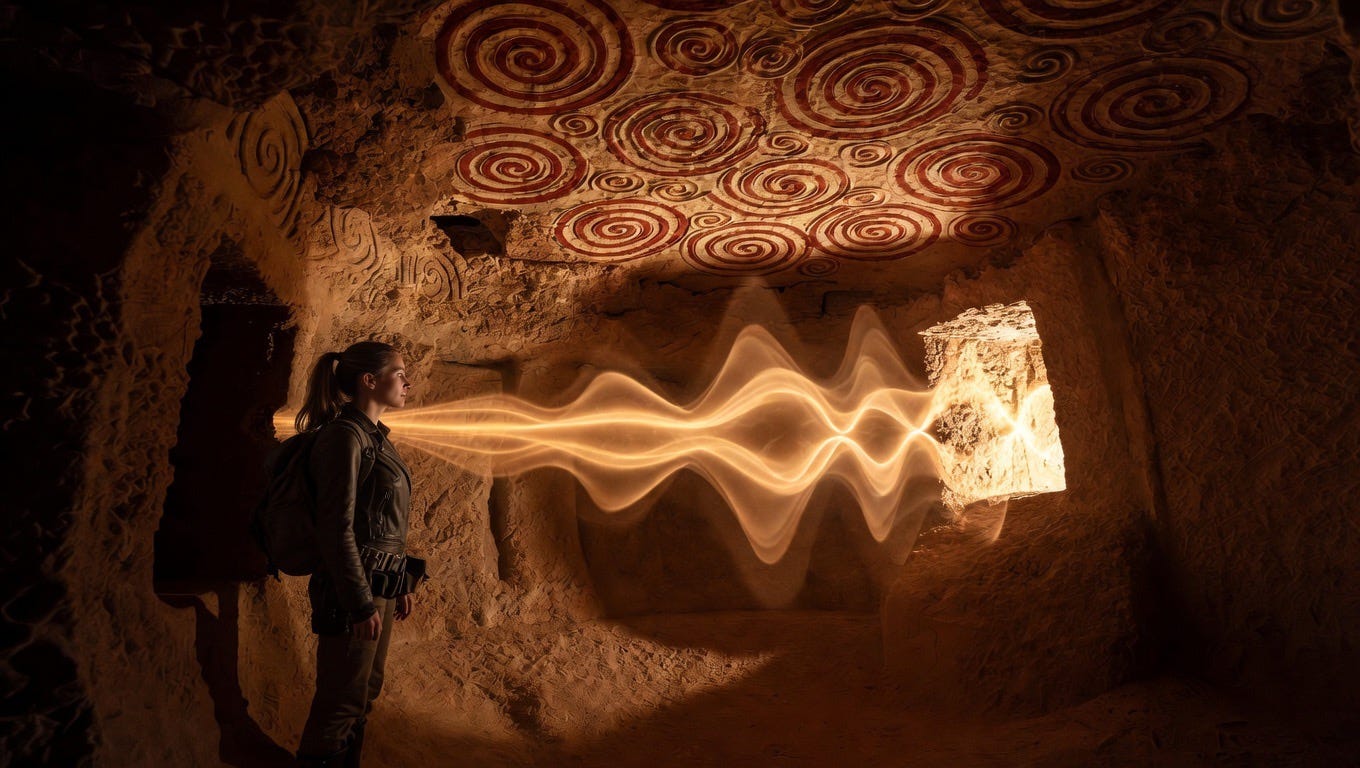
Stand in the rectangular Oracle Room - one of the smallest side chambers off the Main Hall - and speak softly into its carved niche. Your voice doesn’t just echo; it explodes through the entire complex, amplified a hundredfold thanks to the curved walls, concave surfaces, and waveguide like design that funnels sound like a prehistoric amplifier.
Researchers measured a double resonance at 70 Hz and 110-114 Hz, perfect for a deep male “oooh,” shamanic drumming, or chanting that sustains for 7-13 seconds, vibrating through stone and bone alike. Percussion instruments hit harmonics that trigger it too, but random noise or higher pitches? Not the same punch . It was clearly tuned on purpose.
Recent studies go even further, showing the chamber’s geometry across multiple non-contiguous walls was deliberately shaped to produce evenly spaced peak frequencies resembling a musical whole tone scale, something unlikely to be accidental and pointing to intentional acoustic engineering by these Neolithic masters.
Lab EEG tests confirm 110 Hz shifts brain activity toward emotional and intuitive processing, potentially inducing trance or collective altered states during rites. No drugs needed, just the power of vibration in a perfectly carved space.
This sonic tech wasn’t isolated; similar 110 Hz resonances appear in sites like Newgrange in Ireland, suggesting a shared ancient knowledge of psychoacoustics. Could priestesses or oracles have used it to make their voices boom like divine commands, uniting the community in awe? Or was it for healing sessions where the full body vibrations soothed ailments and spirits alike? The ancients clearly understood something profound about sound’s effect on consciousness, turning this chamber into a portal for transcendence long before modern science caught up.
And speaking of mind blowing chambers that hit you right in the soul, let’s go back to the absolute heart of this underground masterpiece: the Holy of Holies! Tucked in the middle level, this small, perfectly carved sanctum is the most temple like space in the entire Hypogeum.
No human bones were ever found inside it; it feels deliberately set apart as the most sacred spot, oriented so winter solstice light would have streamed down from the original surface entrance like a Divine spotlight. The walls and ceiling mimic the above ground megalithic temples so exactly that it’s like the builders wanted God to feel right at home.
Here’s where it gets really exciting for us history hunting explorers: this “Holy of Holies” name and design echo sacred inner sanctums found in totally different ancient cultures thousands of miles and centuries apart. Like the famous Holy of Holies in Karnak Temple in Egypt - that ultra-restricted inner chamber where only the highest priests could enter to commune with God.
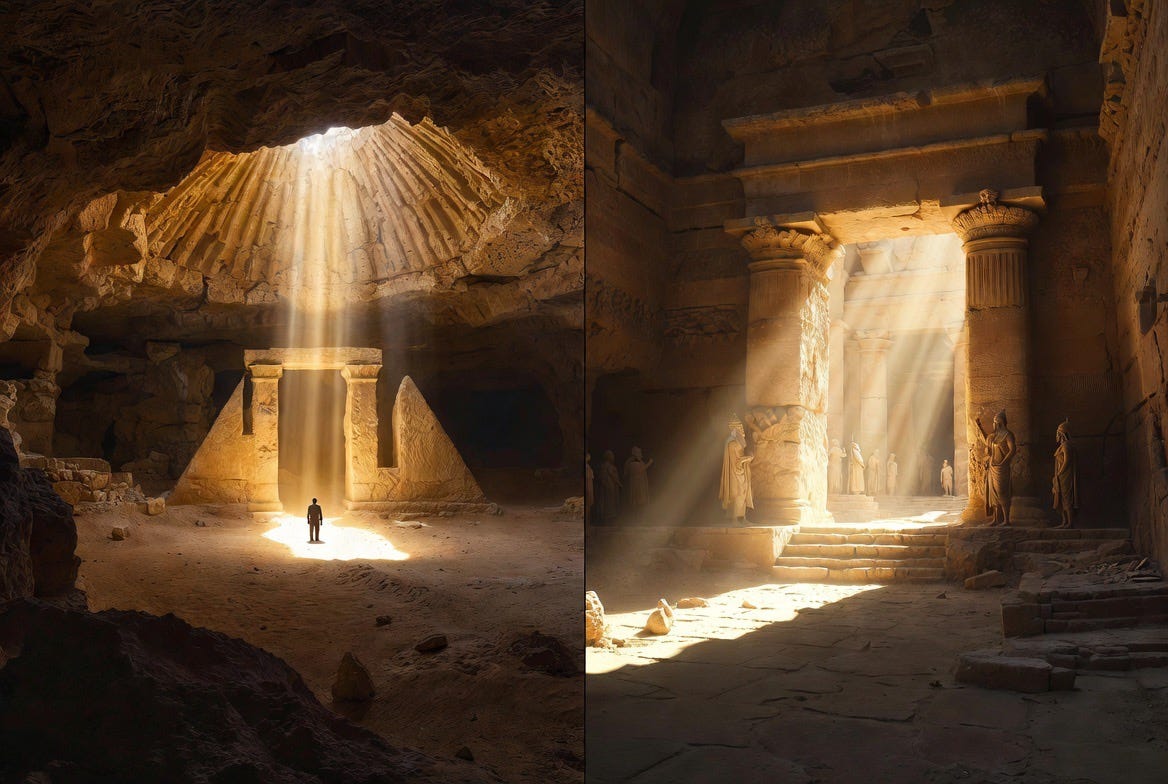
Or Solomon’s Temple in Jerusalem, with its own innermost Holy of Holies housing the Ark of the Covenant, veiled and accessible to no one but the high priest once a year. Same concept, same reverence for a hidden core where heaven and earth supposedly touched. Coincidence? Or evidence of a shared spiritual blueprint that stretched across the ancient world long before Solomon ever picked up his hammer?
What if the Maltese Temple Culture was tapping into something universal. A deep human instinct to create these “most holy” inner spaces for transcendence or direct Divine connection?
Maybe there were earlier, now lost versions of these sacred designs dotting the Mediterranean or beyond, and Solomon’s architects drew from a much older tradition that the Hypogeum folks had already perfected underground 2,000+ years earlier.
Or perhaps it’s even wilder! Ancient civilizations worldwide were worshiping in eerily similar ways for eons because the architecture itself (combined with sound and light) actually worked to shift consciousness. The Oracle’s Chamber here wasn’t just a fancy room. It was a vibrational portal, tuned to the same frequencies we’ve been geeking out over, reminding us that the quest for the Divine might be hard wired into humanity across time and oceans. Mind officially blown, right?
Why Build It? Theories from the Depths
This wasn’t just a tomb. It was a multi purpose powerhouse - burial ground meets sound sanctuary meets possible healing center. The Sleeping Lady figurine (that iconic reclining clay goddess, found right here) screams fertility, death, and rebirth. Red ochre rituals? Blood of the earth, life force.
Maybe it served as a grand initiation hall where young members of the Temple Culture descended into the earth for rites of passage, emerging transformed after experiencing the Oracle Room’s trance inducing hum. The mimicry of surface temples underground could symbolize a journey to the underworld for wisdom or renewal, with the acoustics acting as a tool for collective meditation or Divine communion - voices of the living blending with echoes of the ancestors in a symphony of enlightenment.
Another layer points to sound healing or therapeutic practices: the relaxing full-body vibrations at 110 Hz might have been used to treat physical or spiritual ailments, much like modern sound therapy, helping participants achieve balance in a harsh island environment.
Could it even have been an early observatory of consciousness itself - a lab for exploring altered states without substances, teaching the builders about the vibrational nature of reality? With Tesla’s words ringing in our ears about energy, frequency, and vibration as the keys to the universe, it’s tempting to see the Hypogeum as proof that these “primitive” people were actually tuning into universal truths, creating a space where the veil between worlds thinned and enlightenment flowed freely.
The Big Mystery: Why Abandoned… and Forgotten on Purpose?
Around 2500 BC… POOF!!! They vanish! The Temple Culture ghosts the islands. Hypogeum sealed, temples left to the elements, leaving behind nothing but some broken pottery. Where did they go? And where did all their things go?
Maybe they evolved beyond it, or external pressures (drought? overpopulation?) forced a reset. No dramatic collapse evidence; just quiet abandonment. Then 4,000+ (we don’t really know how old this place is!) years of silence until 1902. It’s like they hid their masterpiece, knowing future eyes might not grasp the frequency tech.
The abandonment feels almost deliberate. There are no signs of violence or sudden catastrophe. It’s like they just faded as if the society had extracted all the wisdom or utility from these sonic wonders and moved on to new horizons, perhaps migrating or shifting to simpler surface living.
Climate data hints at drier conditions around that time, straining resources and making massive underground maintenance impractical, while overbuilding across the islands might have exhausted the collaborative spirit that once united them.
Or was it a spiritual pivot, where the frequencies had served their purpose in guiding enlightenment, and the people chose to carry the knowledge internally rather than in stone?
What strikes me most is how the Hypogeum’s secrets lay dormant for millennia, almost as if the builders foresaw a time when humanity would be ready to rediscover vibration’s power. Malta is a forgotten archive of ancient science preserved in limestone.
By exploring it now, we learn that reality isn’t rigid or materialistic; it’s a symphony of frequencies where sound can reshape consciousness, heal, and connect us to something greater. The ancients remind us that “primitive” is a psyop. They were vibrational pioneers hacking human perception centuries before Tesla or EEG machines.
In the end, this wonder challenges our view of history: what other “lost” technologies or insights are buried under our feet, waiting for curious explorers? By tuning into the Hypogeum’s hum, we glimpse a truth about our reality - one where energy and vibration aren’t just physics, but the very fabric of existence, inviting us to listen deeper and vibrate higher in our own modern quests.
As we sit here in the virtual glow of our lanterns, hearts still pounding from the Holy of Holies’ hum and the silent whispers of those elongated skulls, let’s go full Indiana Jones and ask the question that’s been hovering in the back of every explorer’s mind: could the Hypogeum - and other sites like it - actually have been a portal to other dimensions?
Not some sci-fi wormhole with flashy lights but a carefully engineered vibrational gateway where sound, sacred geometry, and consciousness collided to thin the veil between our world and… something else.
What if the 110-111 Hz resonance wasn’t just for trance states or healing - it was the key frequency that tuned human brains and the limestone itself into perfect harmonic alignment, creating a standing wave that could literally shift reality.
The Holy of Holies, with its corbelled roof and solstice light shaft, acts like a focusing lens, the same way ancient cultures worldwide built inner sanctums (Karnak, Solomon’s Temple) as the ultimate “thin places” where heaven and earth kissed.
Add the elongated skulls - possibly a priestly or “tuned” bloodline whose unique craniums amplified those frequencies even more - and the whole complex starts looking less like a tomb and more like a launchpad. The builders spent 1,500 years perfecting it, then one day… simply vanished.
No war, no famine, no mass graves left unfinished. What if they didn’t die out or migrate? What if they walked through? Maybe the rituals in the Oracle Chamber and Holy of Holies finally opened the door they’d been building toward all along - a dimensional exit for the enlightened, leaving the rest of us with an empty, humming temple as a cosmic breadcrumb trail.
It sounds wild, right? But Tesla’s words keep echoing in my mind: energy, frequency, vibration. If reality is fundamentally vibrational (as modern quantum folks are starting to whisper), then these Neolithic geniuses might have cracked the code millennia before we even had the math.
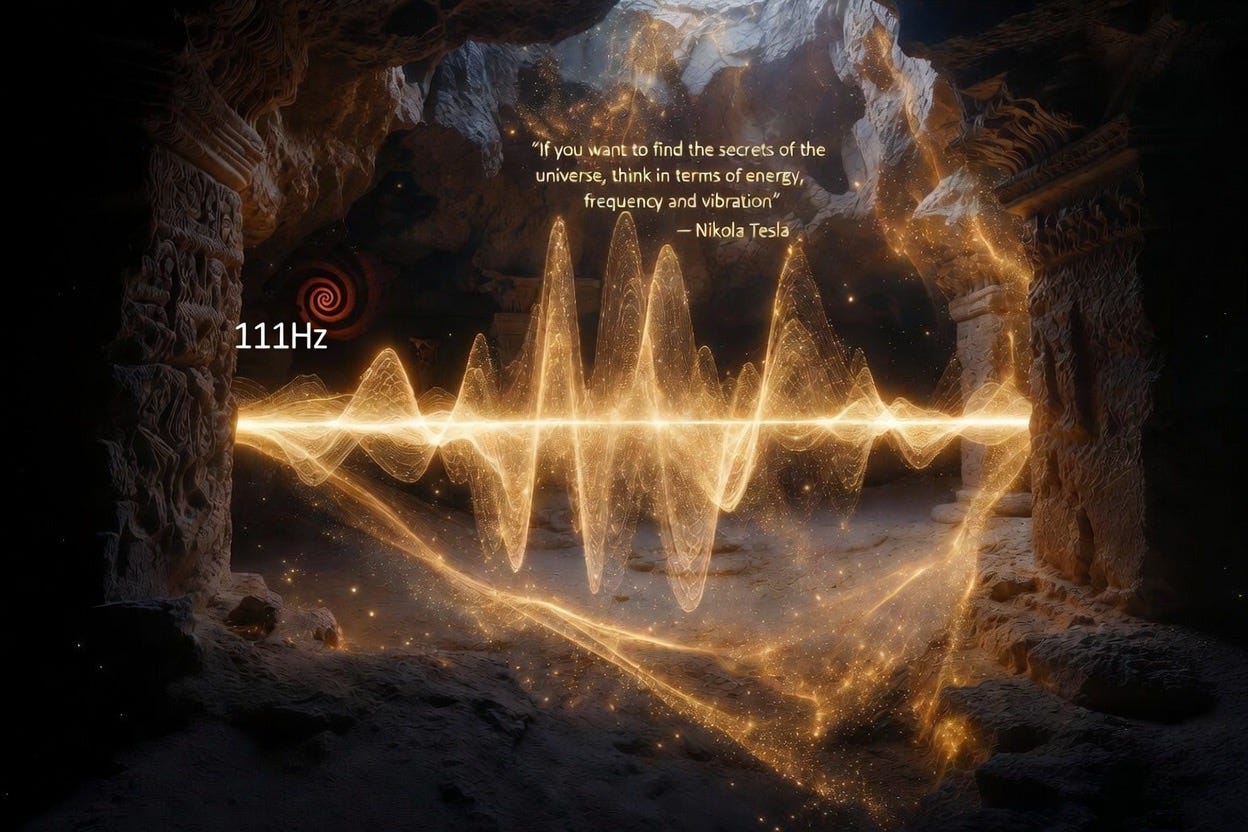
Sites like Newgrange in Ireland share the exact same 110 Hz sweet spot and “otherworld” mythology. The Holy of Holies concept repeats across continents. Could ancient civilizations have been worshipping in eerily similar ways for eons because they were all tapping the same interdimensional tech?
And if the Hypogeum was a portal… well, that would explain why the entire Temple Culture faded so quietly, completely, and suddenly. They didn’t abandon the islands; they upgraded to the next level.
Speaking of next level adventures, where should our crew head on the next expedition? I’m thinking:
the solar aligned passage tombs of Newgrange in Ireland (that also hum at 110 Hz and talk about stepping into the “otherworld”)
the mind-blowing underground cities of Derinkuyu in Turkey with their massive ventilation shafts and mysterious purpose
or even Göbekli Tepe - the world’s oldest known temple complex that might hold clues predating Malta by thousands of years.
Or we could stay in Malta and dive deeper into the above ground megalithic temples that mirror the Hypogeum so perfectly.
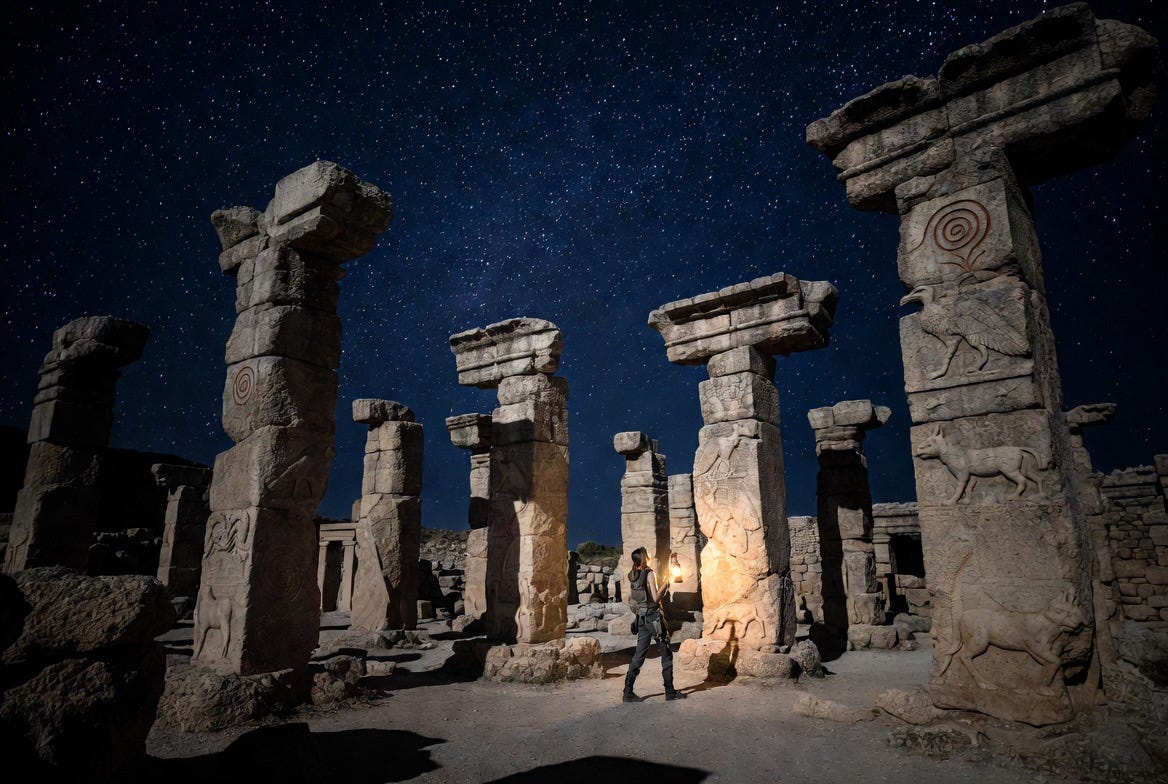
Drop your votes and wild theories in the comments. The adventure is just getting started, and I can’t wait to explore the next forgotten wonder with you all. Who’s ready to chase the next frequency?
What do you think? Healing portal? Oracle amplifier? Or something even wilder? Drop your theories below. Let’s keep the expedition going in the comments. If you’re ever in Malta, book a tour (spots are limited for preservation). Until then, stay curious, vibrate high, and keep seeking the unknown!
Very exciting read this morning. I immediately thought of giants and hiding in underground caves to survive those rogue menacing beasts. I am glad all these things are being rediscovered and everything is coming into the light. No stone will be unturned when Jesus returns. Be ready, share the good news. Time is short.
That seam on the top.of our head..
Tammi...mine hurt/sore so I've been putting castor oil and ivermectin..
Funny you posted this.
Girl..I was sick too 8 days when we wondered about dianne..
My head hurt so bad then.
This cancer doc said he did that too in his program
Shaved head too
I thought at first my hair weight..
I use oils in my scalp with castor oil..
Most people aren't gonna do that either
It's greasy and catches everything flying by you..
I'm interested in firing on all pistons period..